Enterprise applications are where sensitive business logic runs and customer data moves. A single exploitable flaw can cascade into an incident that takes months to contain. In large environments, the problem is rarely a total lack of security testing. It is uneven coverage, inconsistent enforcement, and too little context to prioritize what matters first.
Key takeaways:
- Enterprise application security fails when it’s treated as a compliance exercise rather than a continuous practice.
- Injection attacks, broken access controls, and vulnerable dependencies each require a different detection method; no single tool can cover all of them.
- SAST, SCA, DAST, and IAST operate at different layers of the stack, and the gaps between them are where the most damaging vulnerabilities live.
- Kiuwan helps reduce that gap with Code Security for SAST and Insights for SCA, plus IDE and CI/CD integrations, compliance mappings, and broad language support for heterogeneous portfolios.
Why enterprise application security keeps failing at scale
Security programs fail in a specific way that audits don’t catch. A team has SAST configured for two application teams. Twelve others shipped code last quarter without any coverage. The security dashboard looks healthy because it only shows what’s being scanned. What isn’t scanned doesn’t show up as a gap; it just shows up later as a breach.
Enterprise environments run hundreds of applications across dozens of teams, languages, and deployment pipelines. Security coverage that works for one team rarely extends consistently across all of them. The attack surface grows faster than the security program can track it, and the teams adding the most surface area are often the ones farthest from security oversight.
OWASP guidance continues to highlight categories such as broken access control, injection, security misconfiguration, and software supply chain risk. These issues persist not because teams are unaware of them, but because no single testing method is designed to catch them all.
Common enterprise application security threats and how they reach production
Five vulnerability categories consistently show up in enterprise application security incidents. Understanding how each one reaches production is where detection and prevention start.
Injection attacks
SQL injection, command injection, and LDAP injection share a common root: unsanitized input that reaches an interpreter. The vulnerability lives in the code itself, specifically in how developers handle user-supplied data before it interacts with back-end systems.
SAST tools analyze source code without executing it, tracing data flows from input sources to sensitive sinks. With proper tuning, they can surface parameterization failures, insecure string concatenation, and missing input validation at the point where the flaw was introduced. Running SAST in the IDE means developers see injection risks while they’re still writing the affected method, not after a penetration tester finds it in production.
Broken access controls
Broken access controls are the most consistently exploited vulnerability category in enterprise applications. The failure pattern is usually subtle: a role check fires correctly on page load but doesn’t protect the underlying API endpoint. Or a direct object reference that the UI never exposes becomes accessible when you construct the request manually. Authorization logic that works in the happy path breaks the moment an attacker steps outside it.
Dynamic Application Security Testing (DAST) is often useful in this context. By simulating real HTTP requests against a running application, DAST can probe whether authorization checks hold up when request parameters are manipulated, when session tokens are replayed, or when endpoints are accessed directly. SAST can flag missing access control decorators or obvious authorization gaps. Still, DAST can help detect authorization bypass scenarios that only surface when requests are constructed outside the normal application flow.
Cross-site scripting
XSS vulnerabilities stem from flaws in how output is rendered: user-controlled data reaching the DOM or the HTTP response without proper encoding. A stored XSS persists in the database until it executes in a victim’s browser. Reflected XSS travels through URLs. DOM-based XSS bypasses server-side controls entirely and manipulates the document object model on the client side.
SAST covers the server-side rendering cases well, flagging unencoded output and missing context-aware escaping, but its coverage is only as good as the framework it understands. A custom templating layer or a legacy rendering path that predates the framework’s built-in escaping will often produce false negatives. Teams that rely solely on SAST for XSS coverage and run custom or legacy rendering code should treat that assumption as a gap until it’s verified with DAST. DOM-based XSS requires DAST or manual review regardless, since the vulnerable execution path lives in client-side JavaScript that static analysis of server-side code won’t reach.
Misconfigured cloud services
Cloud misconfigurations don’t live in application code. They live in infrastructure definitions, IAM policies, storage bucket permissions, and network security group rules. An S3 bucket with public read access, an overprivileged service account, or an exposed management interface creates application security risk without a single vulnerable line of code.
Infrastructure-as-code (IaC) scanning and cloud security posture management (CSPM) tools are the primary controls here. IaC scanning catches misconfigured Terraform or CloudFormation templates before they’re deployed. CSPM continuously monitors cloud environments for configuration drift against security benchmarks. DAST can help surface exposed endpoints as part of broader application testing, but it’s not a substitute for dedicated cloud configuration controls. The key is treating cloud configuration as part of your application security program, not as a separate workstream owned by someone else.
Vulnerable third-party libraries
Modern applications rely heavily on open-source components. Every dependency you pull in carries its own vulnerability and maintenance history, and new CVEs continue to emerge in widely used packages. Most teams don’t find out a component is vulnerable until a scanner flags it, and by then it’s already been running in production for months.
Software composition analysis (SCA) is purpose-built for this problem. SCA helps maintain an inventory of your open-source dependencies, maps components to known vulnerabilities from sources such as the NIST National Vulnerability Database, and flags components that may need upgrading or review.
Without SCA, you’ve got no reliable way to know whether the version of Log4j, OpenSSL, or requests you’re running carries a known critical flaw. Manual tracking doesn’t scale across enterprise codebases.
Why enterprise application security requires more than one testing method
Most tool consolidation decisions get made at the procurement level, where “we already have a SAST tool” closes the conversation before anyone asks what it’s missing. The problem is that each method operates at a different layer of the stack, and the gaps between them are exactly where the most damaging vulnerabilities live.
Here’s how they relate:
- SAST analyzes source code, bytecode, or binaries without execution. It’s fast, it integrates into the development workflow, and it finds vulnerabilities early when they’re cheapest to fix. It can’t see runtime behavior, environment configuration, or how components interact once deployed. Teams that rely solely on SAST often have solid coverage of their own code but no visibility into what their dependencies are doing.
- SCA scans dependencies against known vulnerability databases. It’s the only reliable way to maintain visibility into open-source risk at scale. It doesn’t analyze how those dependencies are used or whether the vulnerable code path is actually reachable in your application, so SCA findings need context before they can be added to a prioritized remediation queue.
- DAST runs against a live application to simulate attacker behavior. It surfaces issues that only appear at runtime, including auth-bypass scenarios and configuration exposures, such as missing security headers and weak TLS settings. It requires a deployed environment and doesn’t give you direct line-of-code findings that developers can act on immediately. DAST is most useful when it tests the application the way an attacker would, not just crawl it the way a user would.
- Interactive application security testing (IAST) instruments the application during testing, monitoring code execution in real time. It bridges SAST and DAST by providing accurate, context-aware findings. It requires an agent deployed in the test environment and works best when there’s already solid automated test coverage to exercise the application paths you want monitored. Findings typically have lower false-positive rates than traditional static scanning, though results depend on configuration and test coverage depth. The tradeoff is deployment complexity: IAST adds instrumentation overhead that not every team is set up to manage.
Relying on SAST alone means you’ll miss runtime access control failures, cloud configuration issues, and known CVEs in your dependencies. Relying on DAST alone means you’ll find behavioral issues but lack the code-level context developers need to fix them efficiently. Using SCA without SAST means you’re tracking dependency risk but not catching the injection flaws and logic errors your own developers are introducing.
Operational challenges that weaken enterprise application security
Deploying multiple methods doesn’t automatically solve the problem. The real integration challenge is getting findings from all of them into a shared context where they can be prioritized together. That’s as much a workflow problem as a tooling problem. Consistent enforcement becomes the bottleneck.
Tool sprawl and alert fatigue
Picture a security engineer on a Monday morning trying to answer one question: Are we exposed to the CVE that dropped over the weekend? To find out, they’ve got to check the SAST dashboard, cross-reference the SCA report, pull the DAST results from last week’s staging run, and determine whether the affected component is actually called in any production code paths. That’s an hour of correlation work before any remediation starts. Multiply that by every significant CVE disclosure and every sprint cycle, and you understand why vulnerability backlogs grow even when teams are working hard.
Teams spend significant time dealing with false positives from security scanning tools. When findings from four separate tools arrive without shared context about priority or overlap, remediation slows to a triage exercise. The backlog grows regardless of how many tools you’re running.
Prioritization by exploitability, not raw severity
A critical-severity CVE in a library function that’s never called in your application is not your most urgent problem. A high-severity injection flaw in an authentication endpoint that’s exposed to the internet probably is. CVSS scores don’t make that distinction. They measure inherent vulnerability characteristics, not exploitability in your specific environment.
The gap matters because most enterprise codebases generate more findings than any team can remediate in a sprint cycle. Without a way to separate what’s actually reachable and exposed from what’s theoretically severe, teams either freeze on triage or work through findings in the wrong order. Effective prioritization requires correlating static analysis results with runtime context and deployment information. Most teams that skip that step don’t realize they’re doing so. They just wonder why the same vulnerability classes keep reappearing sprint after sprint.
Compliance frameworks as a testing strategy anchor
The teams that get the most value from compliance frameworks are the ones that treat them as a coverage floor, not a finishing line. PCI-DSS scope reduction is a case in point: teams that architect systems to minimize what falls within scope rather than to maximize security coverage pass their audits yet still leave exploitable gaps. Their interpretation is what failed them.
OWASP Top 10, PCI-DSS, and NIST are still worth anchoring to. PCI-DSS requires vulnerability scanning and penetration testing for applications that handle cardholder data. NIST SP 800-53 specifies security testing as part of a broader control framework. The OWASP Top 10 reflects where real-world exploitation is concentrated, making it a useful signal for prioritizing testing investment beyond what compliance strictly requires.
If your program can demonstrate coverage aligned to all three frameworks, you are in a stronger position to reduce common blind spots and support audit readiness. That still does not guarantee security, but it gives teams a more defensible baseline.
Kiuwan supports compliance-oriented reporting and policy alignment across standards such as OWASP, CWE/SANS, PCI DSS, CERT, NIST, MISRA, and ISO-based quality models, making compliance reporting easier without turning compliance into the whole security strategy.
How to integrate enterprise application security into CI/CD pipelines
A finding caught in the IDE takes minutes to fix. The same finding, caught at a pre-production gate, takes a sprint to schedule and another to fix. The same finding takes months and a forensics team after the breach. The cost of a vulnerability doesn’t stay constant as it moves through the SDLC. It compounds. Teams that understand this don’t run security as a separate late-stage gate. They push testing as close to the point of code creation as the tooling allows.
Teams that get this right typically follow a consistent pattern:
- Run SAST and SCA on every pull request, with findings scoped to the changed code so developers aren’t triaging an entire codebase backlog on every commit.
- Set quality gates that block merges for high-severity findings in critical code paths, while routing lower-severity findings to a tracked backlog.
- Run DAST against deployed staging environments on a scheduled basis or as part of pre-production release gates.
- Configure notifications to route findings to the team that owns the affected component, rather than to a central security inbox that no one has the bandwidth to monitor.
How Kiuwan helps reduce tool sprawl in enterprise application security
Kiuwan takes a broader platform approach to tool sprawl and coverage consistency. Code Security covers SAST, while Insights covers SCA, giving teams a more unified way to review application and dependency risk without pretending one testing method can do everything.
- Unified visibility across proprietary and open-source risk: within the Kiuwan platform, Code Security analyzes your proprietary code, while Insights analyzes open-source dependencies. Together, they give teams broader visibility into application risk without forcing separate workflows for every layer.
- 30+ language support across heterogeneous portfolios: a financial services firm running Java microservices alongside a COBOL core banking system cannot afford a SAST tool that only covers half the codebase. Kiuwan supports 30+ languages, including both modern and legacy environments, helping teams apply static analysis more consistently across large portfolios.
- Direct IDE and CI/CD integration: Developers can run Kiuwan analysis from IDEs such as Visual Studio, VS Code, Eclipse, and JetBrains tools, then automate scans through CI/CD workflows using tools such as Jenkins, GitLab, and Azure DevOps. That helps teams surface issues earlier, while the code is still fresh and easier to fix.
- Prioritized findings over raw noise: one of the biggest problems in enterprise AppSec is not just finding vulnerabilities, but deciding what to fix first. Kiuwan Code Security is designed to help teams detect and prioritize vulnerabilities, review findings in a dashboard, and apply quality gates and remediation guidance earlier in the workflow.
- Compliance mapping built in: Kiuwan maps findings to OWASP Top 10, CWE/SANS Top 25, PCI DSS, CERT, MISRA, NIST, and ISO/IEC 25000, making compliance reporting easier without turning compliance into the whole security strategy.
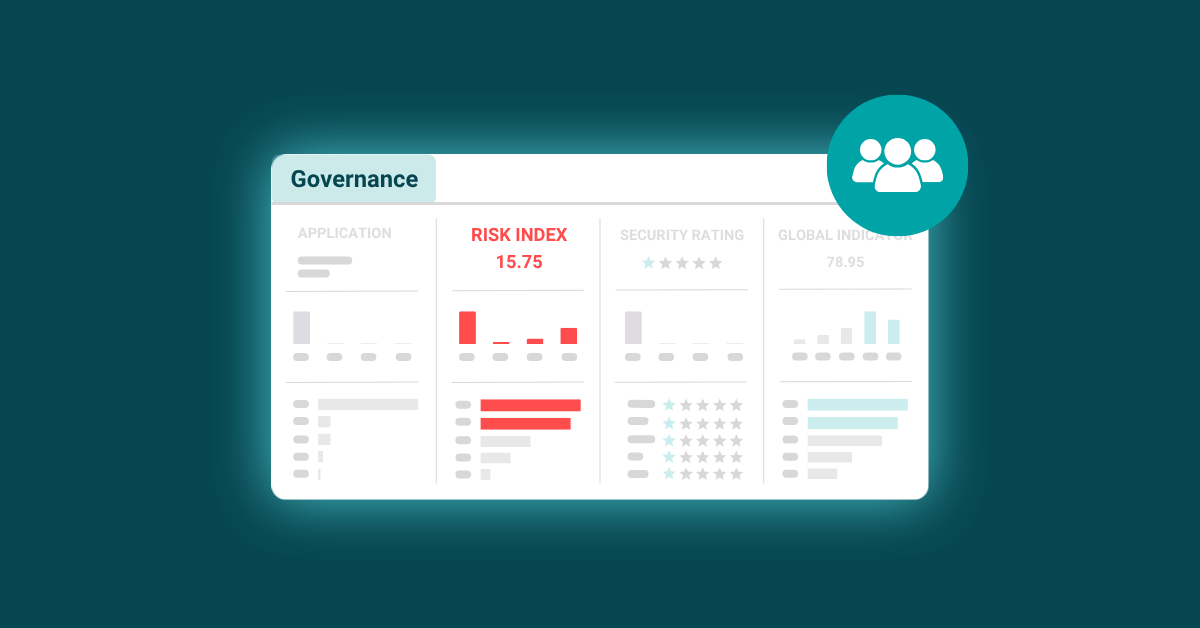
Engineering managers and IT leaders who need visibility into codebase health over time, not just point-in-time vulnerability counts, can extend that foundation with Kiuwan Insights for software composition analysis and SBOM generation, and with Kiuwan Code Quality and Governance for software analytics, policy visibility, technical debt reduction, and portfolio-level reporting.
Build an enterprise application security program that reduces breach risk
Passing an audit and preventing a breach are two different outcomes, and most enterprise security programs are optimized for the wrong one. Kiuwan helps teams close that gap by combining Code Security for SAST with Insights for software composition analysis, alongside the IDE and CI/CD integrations developers already use. If you are ready to see what is currently exposed in your applications, start your free Kiuwan trial.