


We know evaluating a new platform takes due diligence. Find straightforward answers to the questions that matter most to your team.
Still have questions?
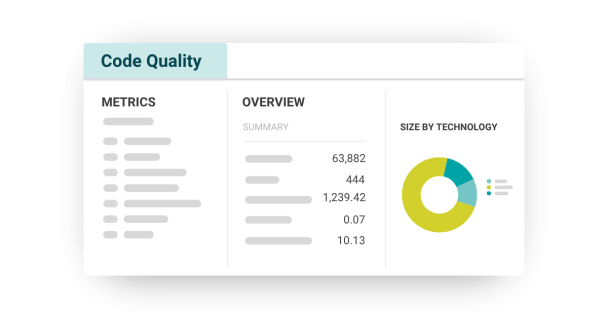
Kiuwan Code Quality helps teams assess software quality using ISO 25000 characteristics such as efficiency, reliability, maintainability, security and portability. It identifies defects, shows where they appear in the code, and helps teams prioritize remediation through Action Plans.
Kiuwan Code Quality evaluates code against an ISO 25000-based quality model. When a rule in that model is violated, Kiuwan records the exact defect location, including the affected file and line. Teams can review findings by rule, by file, or by analysis to focus on the areas that most affect code health.
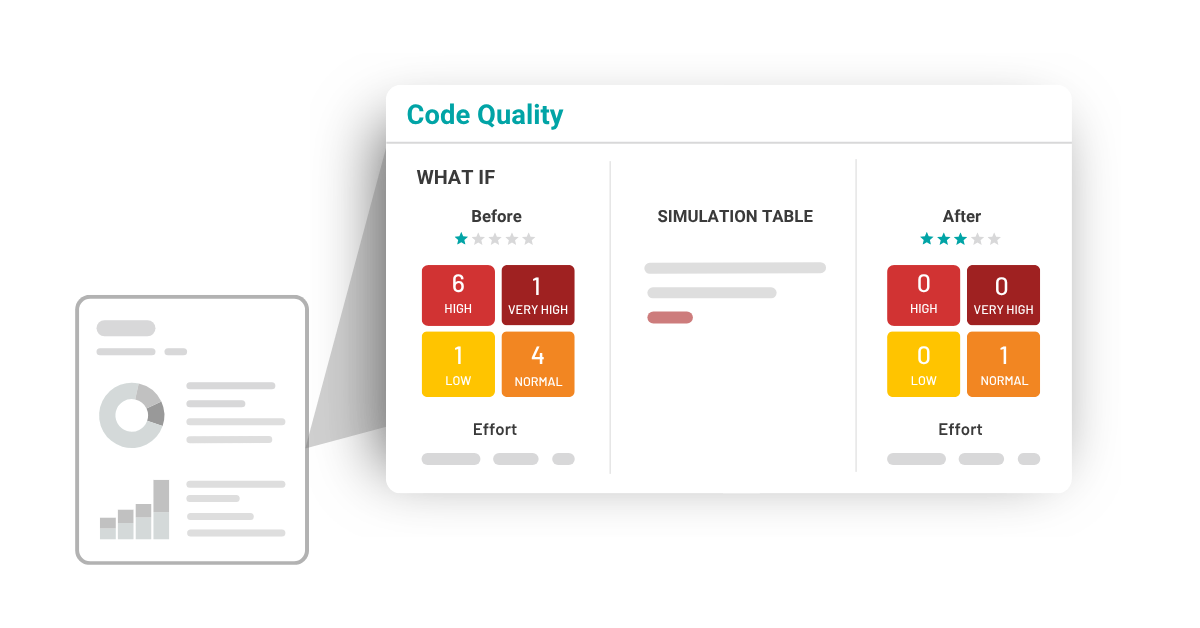
An Action Plan is a defined set of defects to fix, often tied to goals, dates, and responsible assignees. Teams can create one manually by selecting defects or generate one based on goals and "What If" simulations. This helps turn analysis results into a practical remediation workflow.
Yes. Kiuwan Code Quality includes visual configuration so teams can customize analysis rules and properties to match internal coding guidelines. It also supports rules management and extending models with new Kiuwan rules when needed.
Yes. Kiuwan Code Quality integrates into build and delivery workflows, including Jenkins, so teams can run analysis automatically as part of CI/CD. This helps standardize quality checks and identify issues earlier in the development process.
Yes. Kiuwan provides differential reporting so teams can compare analyses across versions and see which defects were introduced, removed, or changed. This makes it easier to track quality trends over time and measure progress.