Most Java teams shopping for a code quality tool already have one.
They’re replacing it because the false positives drowned the signal, the security overlap turned out to be less complete than expected, or the build slowed by 20 minutes, and developers started skipping the gate. The eight tools below are strong candidates for teams that need Java code quality checks to survive real-world CI/CD use, procurement scrutiny, and developer adoption.
Quality and security are adjacent disciplines in Java. A method with a cyclomatic complexity of 25 is hard to maintain and hard to audit for injection paths. Tools that measure only one half of that surface often leave the other half to a second scanner, a second dashboard, and a second budget line. Some tools below cover both quality and security. Others specialize in one side of the problem. The rest of this guide names which is which and where each tool fits.
A note on bias: Kiuwan publishes this guide and is the first tool listed below, framed as our pick. The selection criteria and per-item evaluations apply to Kiuwan’s entry the same way they apply to every other tool. Strengths and watch-outs are sourced from documented product capabilities, public benchmark data, public review-site signals where available, and open-source project documentation. Because ratings, pricing, and product packaging can change, teams should verify current details before making a purchase decision.
How we selected these Java code quality tools
Eight tools were selected to represent three deployment archetypes:
Free open-source CI gates and IDE coaches (PMD, Checkstyle, SpotBugs, Error Prone), commercial platforms covering both quality and security (Kiuwan, SonarQube, Coverity), and architecture-level governance tools (JArchitect)
Cross-reference signals included public product documentation, open-source project activity, availability of Maven and Gradle integration, Java-specific rule depth, review-site signals where available, and whether the tool supports quality gates in CI/CD.
Tools without documented Java rule sets, tools with no active maintenance post-2023, and tools requiring proprietary build systems were excluded.
Tool
Best for
Rating
Pricing
Security coverage
On-premise
Primary integration
Kiuwan
Unified SAST + quality in regulated environments
4.5/5 G2
Usage-based
Yes (CWE, OWASP, PCI, CERT, SANS)
Yes
Jenkins, GitHub Actions, IntelliJ
SonarQube
Quality and security in a widely adopted platform
4.4/5 G2
Free / paid tiers
Partial
Yes
Maven, Gradle, SonarLint
PMD
Custom rule sets without licensing cost
OSS
Free (BSD)
No
N/A
Maven, Gradle
Checkstyle
Java coding standard enforcement
OSS
Free (LGPL)
No
N/A
Maven
SpotBugs
Bytecode-level bug detection
OSS
Free (LGPL)
Partial (find-sec-bugs)
N/A
Maven, Gradle, Eclipse
Error Prone
Compile-time bug detection
OSS
Free (Apache 2.0)
No
N/A
Maven, Bazel
Coverity
Enterprise SAST depth
4.2/5 G2
Annual contract
Yes
Yes
Jenkins, Bamboo
JArchitect
Architecture and dependency governance
N/A
From $599/seat
Partial
Yes
Jenkins, Bamboo
What “code quality” means in Java and why it connects to security
A Java method with 25 decision points is harder to maintain, test, and audit. That’s the relationship most quality discussions skip.
The ISO 25010 quality model provides Java teams with a useful vocabulary for evaluating maintainability, reliability, and testability. In practice, teams often translate those ideas into thresholds such as cyclomatic complexity, method length, duplication, nesting depth, and test coverage. These metrics are not perfect predictors of defects, but they help teams identify code that is harder to change safely and harder to review thoroughly.
High-complexity methods are also harder to audit for security issues. The same property that makes a method hard for a developer to reason about makes it hard for a reviewer to audit for injection paths or authorization gaps. Teams that scan for code maintainability and security separately can end up reconciling two dashboards, two rule sets, and two sets of priorities. The eight tools below vary in how many ISO 25010 sub-characteristics they measure, whether they cross into security, and what they cost to operate.
1. Kiuwan: Unified SAST and code quality for regulated Java environments
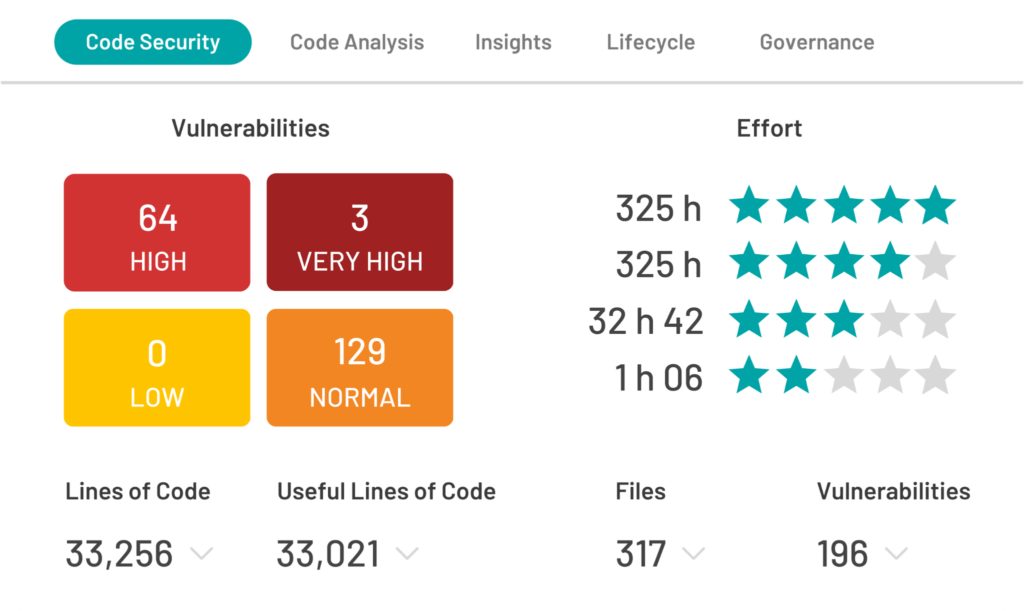
Kiuwan scans Java source for security vulnerabilities and ISO 25010 quality sub-characteristics in a single analysis pass. CWE-mapped security findings, cyclomatic complexity, defect density, and clone-coverage metrics come from the same engine, not from two tools stitched together at the dashboard layer. Kiuwan is part of the Sembi portfolio, trusted by 300+ organizations and 20,000+ users over more than 20 years.
In the 2025 OWASP Benchmark write-up, Kiuwan reported a 100% true positive rate and a 16% false positive rate. That benchmark signal provides useful context for teams evaluating whether a single platform can cover both security and code quality, though teams should still test results against their own Java codebase before standardizing.
What we like:
Unified SAST, SCA, and code quality in one scan, with no context-switching between tools
Integrates into Jenkins, GitHub Actions, GitLab CI/CD, Bitbucket Pipelines, IntelliJ IDEA, and Eclipse with native plugins
Native alignment to CWE, OWASP, PCI DSS, CERT, SANS, and ISO 25000, so findings are pre-mapped for compliance reporting without manual effort
On-premise local analyzer keeps source code inside the network for financial services, healthcare, and defense teams
30+ languages supported, covering legacy stacks alongside modern Java
Watch out for:
Initial configuration and rule tuning take longer than a SonarQube Community spin-up. Teams without a dedicated AppSec engineer should budget time for baseline setup.
Pricing is either usage-based or quote-based, which can make early budget comparisons harder than with tools that offer public per-seat pricing.
Pricing: Usage-based by lines of code and number of applications. Free trial available. Verify current pricing with Kiuwan before publishing or purchasing.
2. SonarQube: Code quality and security in a widely adopted platform
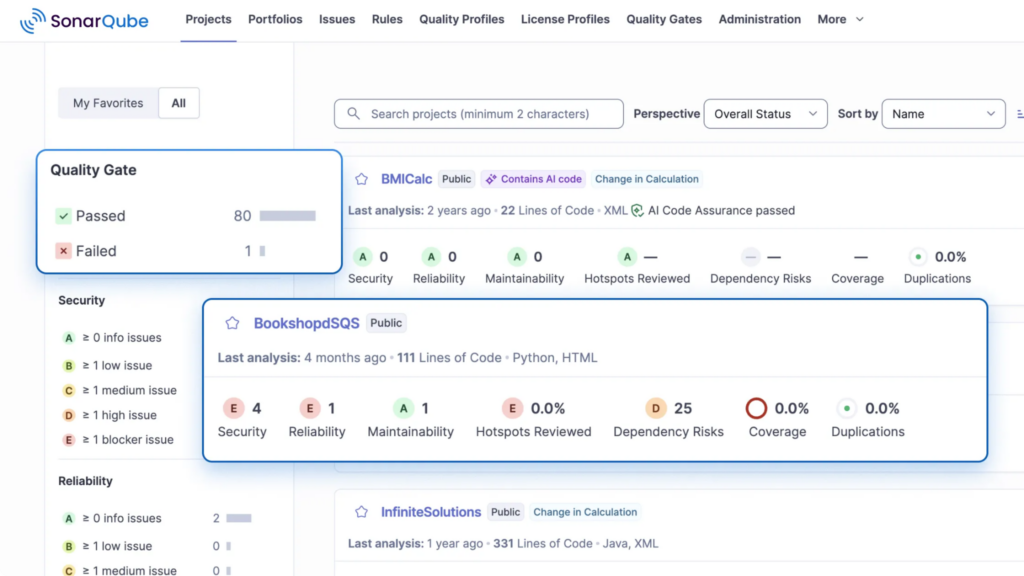
SonarQube is the default point of comparison in this category. It has broad language support, a mature Java analyzer, and a large ecosystem around SonarLint, Maven, Gradle, Jenkins, GitHub Actions, GitLab, and Azure DevOps. Community Edition is free and open source, so new team members can adopt it faster because they’ve likely seen it before.
The Java rule library’s depth is among the strongest in the category. The structural difference for regulated teams is that compliance mapping, SCA coverage, advanced security analysis, and enterprise governance features depend on edition and configuration. Compared to Kiuwan, teams may need to do more work to align findings to specific compliance reporting needs.
Watch out for:
Security compliance mapping may require extra configuration or paid-tier capabilities, depending on the requirement.
SCA is a paid-tier addition, not bundled with Community Edition
Pricing: Community Edition is free. Developer, Enterprise, and Data Center editions are priced by lines of code. Verify current packaging before purchasing.
3. PMD: Custom Java rule sets without a licensing cost
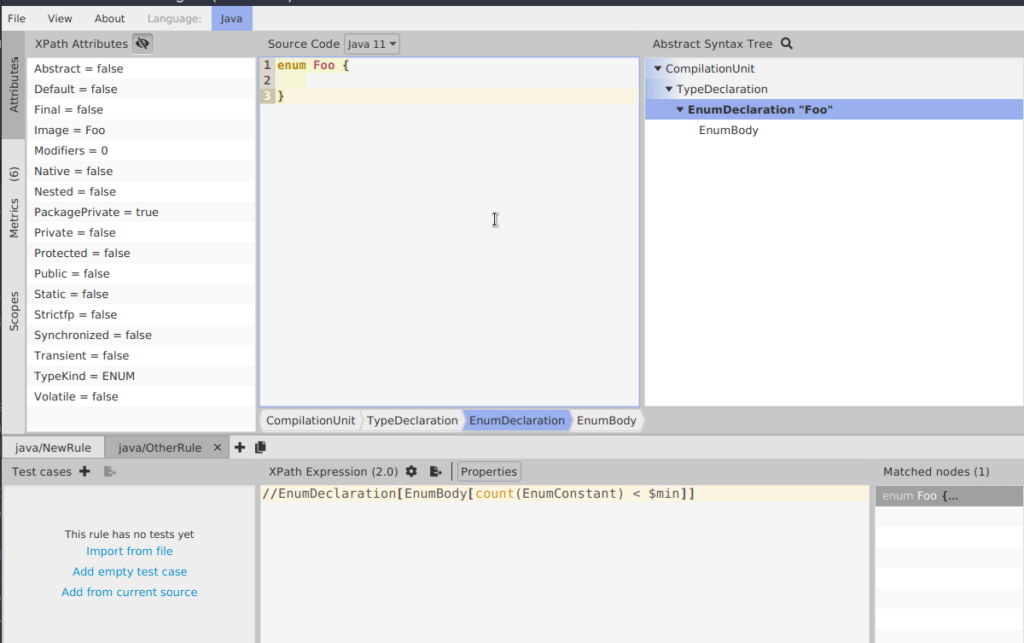
PMD is a free, open-source, extensible static code analyzer with 400+ built-in Java rules covering best practices, code style, design, performance, and security patterns. The copy-paste detector bundled with PMD finds duplicate code across many languages. Custom rules in Java or XPath give teams full control over what gets flagged.
Integration runs through the Maven PMD plugin, Gradle PMD plugin, Eclipse, IntelliJ, and Jenkins. BSD license, no seat fees, no usage limits. The tradeoff is that out-of-the-box rule sets can produce noise, so a meaningful signal requires upfront tuning.
Watch out for:
PMD is not a dedicated SAST platform. It can flag some security-related patterns, but it does not replace a security scanner with CWE, OWASP, PCI, CERT, or SANS reporting.
Portfolio-level dashboards, compliance workflows, and cross-application governance require additional tooling.
Who should not use it: PMD is the right free choice for teams that need customizable Java code quality rules without licensing costs. Teams that need compliance-mapped findings or portfolio dashboards should evaluate Kiuwan or SonarQube Enterprise alongside the free stack.
4. Checkstyle: Enforcing Java coding standards with zero-friction CI integration
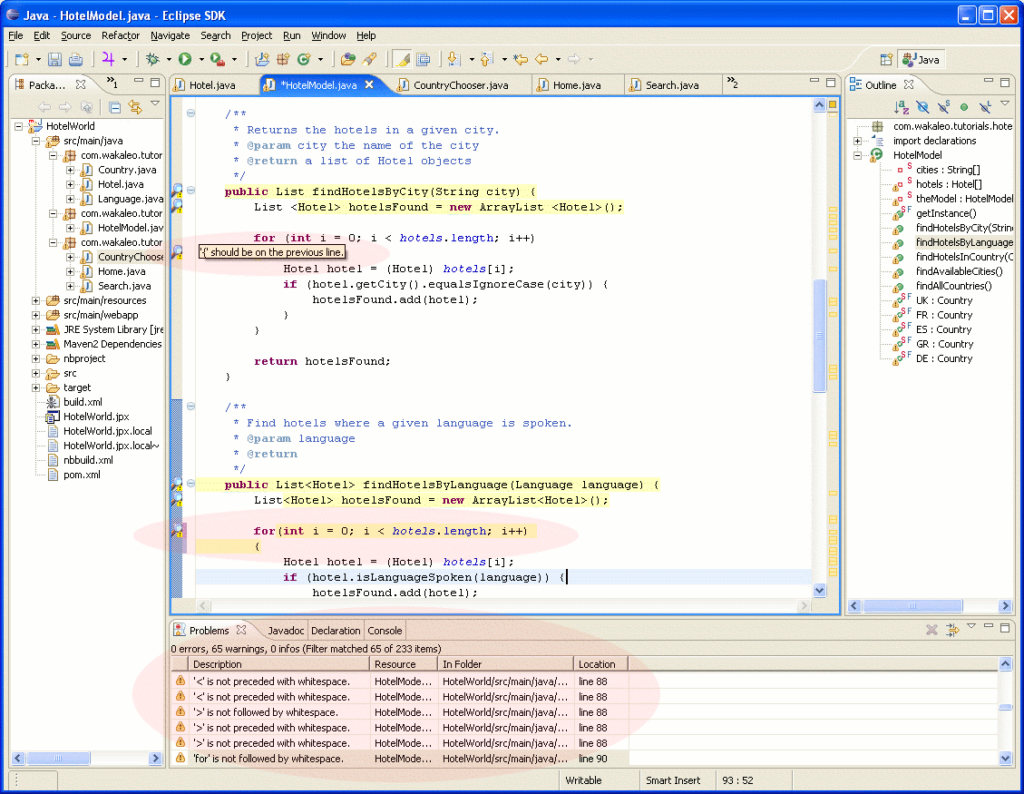
Checkstyle automates the enforcement of Java coding standards: indentation, naming conventions, whitespace, and Javadoc presence. It ships with the Google Java Style Guide and Sun code convention profiles, and supports 700+ checks out of the box. Scope is narrow by design: Checkstyle catches style violations, not bugs or security issues, and analyzes one file at a time without cross-file dataflow.
It makes sense as the style layer in the free OSS combination alongside PMD and SpotBugs, or for teams enforcing a house standard before code review. The Maven Checkstyle plugin is a zero-friction CI addition.
Watch out for:
Rule configuration is XML-based and verbose. Teams need a shared config that everyone agrees to before the tool pays off. Pricing: Free (LGPL license).
Checkstyle is not a bug detector or SAST tool. It should be paired with PMD, SpotBugs, SonarQube, Kiuwan, or another scanner when teams need deeper quality or security analysis.
5. SpotBugs: Bytecode-level bug detection in existing Java codebases
SpotBugs is the community-maintained successor to FindBugs, using static bytecode analysis to detect 400+ Java bug patterns: null pointer dereferences, infinite recursive loops, misuse of the Java API, and security vulnerabilities via the find-sec-bugs plugin. Because it analyzes compiled bytecode rather than source, it catches a class of errors that source-only analyzers may not surface.
Where Checkstyle enforces style and PMD flags code-level quality patterns, SpotBugs operates on compiled class files. A compile step must be completed before SpotBugs runs. That’s the structural tradeoff: deeper detection at the cost of a slightly slower feedback loop. The Find Security Bugs plugin adds security checks for Java web and Android applications, including common injection and cryptographic weaknesses.
Watch out for:
Find Security Bugs adds useful OWASP and CWE-referenced security coverage, but SpotBugs plus Find Security Bugs is still not the same as a commercial SAST platform with compliance workflows, governance reporting, and portfolio-level prioritization.
The false-positive rate can be high on legacy codebases without rule tuning.
Pricing: Free (LGPL license).
6. Error-prone: Compile-time Java bug detection with zero additional tooling
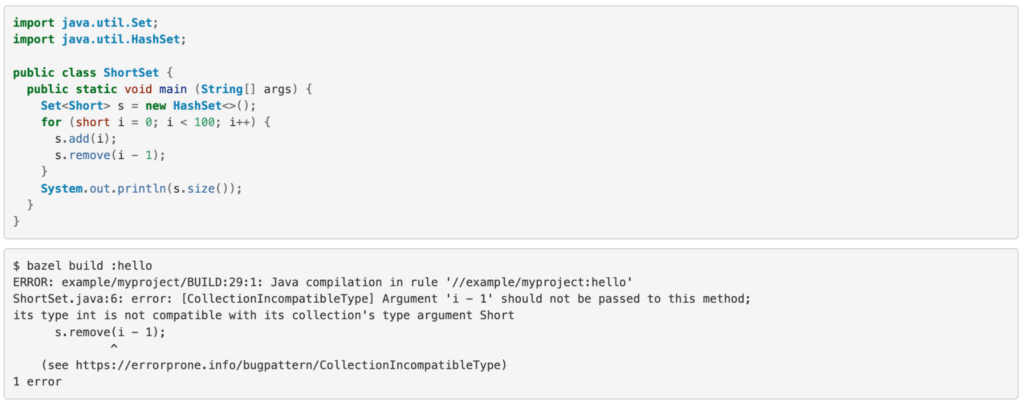
Error Prone, developed and used internally by Google, hooks directly into javac to flag common Java mistakes as compile-time errors. Findings appear in the build output alongside compiler errors. No additional CI step, no server, no dashboard. Open-source under Apache 2.0, with Maven and Bazel integration.
It pairs well with PMD and SpotBugs in the free OSS combination for Maven- or Bazel-native Java teams. It is not appropriate as a primary static analysis tool: it lacks quality metrics, a dashboard, and security coverage beyond common Java API misuse.
Watch out for:
Current Error Prone documentation notes that it must run on JDK 21 or newer, although it can still be used to build older Java code with the right source, target, or release flags. That can create friction for teams with older build infrastructure.
No dashboard, no portfolio reporting, and no dedicated security compliance workflow.
Pricing: Free (Apache 2.0).
7. Coverity: Enterprise code quality and SAST depth for large Java codebases
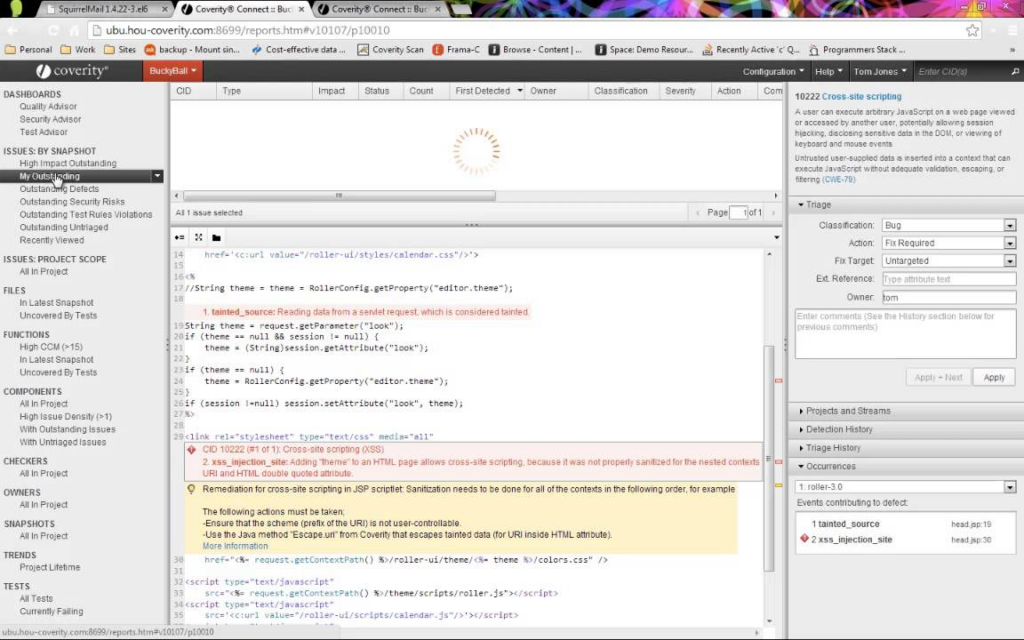
Coverity, now part of Black Duck, is a SAST platform with more than 15 years of commercial experience. Path-sensitive dataflow analysis across interprocedural call chains catches vulnerabilities that simpler pattern-matching tools may miss. It supports a broad set of languages and frameworks and is commonly evaluated by enterprises with formal security governance requirements. Cloud and on-premises deployment options are available depending on the package and deployment model.
What we like:
Interprocedural dataflow catches vulnerabilities that PMD, Checkstyle, and SpotBugs may not reach.
Enterprise deployment and governance options make it a fit for large organizations with formal AppSec programs.
Watch out for:
Enterprise depth comes with enterprise complexity. Implementation, tuning, and governance workflows can take longer than those for lightweight tools.
Pricing is contract-based and generally not appropriate for mid-market teams, solo developers, or teams that only need basic Java quality checks.
Public reviews often mention false positives and usability as areas to validate during evaluation, so teams should run a proof of concept on their own codebase.
Pricing: Annual contract based on team size and number of codebases.
8. JArchitect: Java code quality tool for architecture-level dependency analysis
JArchitect (from CoderGears) is a static analysis platform focused on Java architecture governance: dependency graphs, coupling analysis, complexity trending, and code querying via CQLinq. Where PMD and Checkstyle check individual methods and file quality, JArchitect models structural relationships across the whole application.
The Dependency Structure Matrix surfaces architectural coupling, cycles, and violations of layering. CQLinq lets teams define custom architecture rules as code and trend them over time. That gives JArchitect a distinctive role in this list: it is less about finding individual bugs and more about governing architectural drift. CI integration runs via Jenkins, Bamboo, and Hudson with build-fail quality gates.
Watch out for:
No dedicated G2 or Capterra product page, which limits independent social proof for procurement decisions
JArchitect is not a dedicated SAST platform. Teams needing CWE, OWASP, PCI, CERT, or SANS security reporting should pair it with a SAST tool such as Kiuwan, SonarQube, or Coverity.
Build machine pricing is materially higher than developer-seat pricing, so CI/CD deployment costs should be reviewed before purchase.
Pricing: Subscription from $599 per seat, priced by lines of code and seat count.
Which Java code quality tool fits your situation
Solo dev or small team, no AppSec budget
PMD, SpotBugs, and Checkstyle cover style enforcement, bug detection, and some quality patterns at zero cost. Add Error Prone if the team is Maven- or Bazel-native. This stack provides CI integration but not commercial dashboards, compliance reporting, or full SAST governance.
Growing org with a dedicated AppSec mandate or compliance deliverable
Kiuwan, if on-premises or hybrid-cloud deployment matters, or if compliance reporting aligned with CWE, OWASP, PCI, CERT, SANS, and ISO 25000 is a deliverable. SonarQube Enterprise is the right choice if developer adoption and ecosystem breadth are the priority, and compliance mapping is handled separately. If open-source dependency risk is also on the docket, Kiuwan’s unified SAST and SCA can help cover both surfaces in one workflow.
A regulated shop where source code cannot leave the network
Prioritize tools that support local or on-premises analysis. Kiuwan’s Local Analyzer is a strong fit for this constraint because teams can analyze code locally while still reporting results into a unified workflow. Coverity and SonarQube may also fit depending on deployment requirements, budget, and governance needs.
Start evaluating Java code quality and security in the same scan
Java code quality and application security are adjacent problems. The teams that measure both from a single scan surface issues faster, with less tooling overhead and fewer dashboard reconciliations during compliance review. The eight tools above each cover a portion of that surface. A smaller set covers both quality and security.
Kiuwan’s free trial gives teams a way to evaluate SAST, SCA, and code quality coverage against their own Java codebase, in their own CI/CD pipeline, with their own quality thresholds.
Frequently asked questions about Java code quality tools
What is the difference between a code quality tool and a SAST tool?
Code quality tools help teams enforce coding standards, maintainability thresholds, bug patterns, and structural rules. SAST tools analyze source or bytecode for exploitable security vulnerabilities mapped to CWE, OWASP, or PCI DSS. Some tools, including Kiuwan and SonarQube, cover both; most open-source options specialize in one part of the workflow.
Can I use PMD, SpotBugs, and Checkstyle together?
Yes, they are designed to complement each other. PMD covers code style and design patterns, SpotBugs covers bytecode-level bug patterns, and Checkstyle covers formatting and naming standards. All three integrate into Maven and Gradle and run in the same CI pipeline. The combination covers quality and some security-oriented bug patterns when paired with Find Security Bugs, but it does not fully replace a dedicated SAST platform for compliance-mapped security reporting.
It can for some teams, depending on the edition, rule coverage, and compliance requirements. For regulated environments with formal PCI DSS, NIST, or CWE reporting requirements, a dedicated SAST platform with pre-mapped compliance findings can substantially reduce audit overhead.
How do these tools handle legacy Java codebases?
Bytecode-based tools, such as SpotBugs and Coverity, analyze compiled output and may be useful when source-level analysis is harder to configure. PMD and Checkstyle work on source and support older Java versions with the right configuration. Kiuwan supports 30+ languages, including legacy stacks, and offers local analysis for environments where legacy code cannot leave the network.
Get Your FREE Demo of Kiuwan Application Security Today!
Identify and remediate vulnerabilities with fast and efficient scanning and reporting. We are compliant with all security standards and offer tailored packages to mitigate your cyber risk within the SDLC.
Java source code security scanning tools differ in how deeply they analyze application data flows, how well they understand common Java frameworks, and how easily they fit into development workflows.…
A developer adds a dependency mid-sprint to solve a routing problem. It works, the pull request merges, and the team moves on. Four days later, a CVE is disclosed against…
Every October, the Cybersecurity and Infrastructure Security Agency (CISA) leads Cybersecurity Awareness Month, an annual effort to strengthen cybersecurity and protect the systems we rely on. This year’s theme, “Securing…