Continuous Vulnerability Monitoring: How It Works
A developer adds a dependency mid-sprint to solve a routing problem. It works, the pull request merges, and the team moves on. Four days later, a CVE is disclosed against…


Security vulnerabilities and quality issues are notoriously difficult to pinpoint. Typically, they are introduced early in software development but don’t surface until the production stage. As the NIST cost escalation calculator illustrates, the cost of fixing defects generally rises the later they are found in the software development lifecycle.
C# static code analysis speeds up the diagnostic process. Static analysis tools examine source code before it is executed, identifying security weaknesses, quality issues, and standards violations early in the cycle. This means development teams can identify risks during the coding phase itself, while it’s relatively easy to correct the issues.
We’ll explain what C# static code analysis does and how it compares to other testing approaches. We’ll also talk about its real-world use cases.
C# static code analysis is a software testing technique that examines .NET source code without executing it. Static analysis tools don’t wait until runtime to check for defects; instead, they inspect code structure, logic patterns, and dependencies, flagging potential vulnerabilities or standards violations.
Static application security testing (SAST) is one of the key use cases of static code analysis. SAST tools identify security weaknesses in code before it reaches a runtime environment. They scan your codebase, mapping how data moves through the application and checking for patterns like injection flaws, insecure configurations, or improper error handling.
Static analyzers scan code for “code smells,” or patterns that can indicate structural problems. They look for excessively long functions, duplicated or dead code, long, nested statements, and other issues that are detectable without execution. Over time, these issues all increase vulnerability to new defects, slow down development, and make codebases harder to maintain.
C# applications are vulnerable to SQL injection and other unsafe patterns, like cross-site scripting and improper error handling. When a static analysis tool detects one of these issues, it generates a SAST finding, an alert including the vulnerability type, its severity, and its location. SAST findings help development teams set priorities and write code that meets industry standards.
Some platforms pair static code analysis with software composition analysis (SCA) to identify vulnerable open-source dependencies, such as outdated NuGet packages. This is related to static analysis, but it addresses a different risk area: third-party component exposure rather than defects in proprietary C# code.
Static analysis tools are highly customizable and can be configured to enforce industry-specific coding standards. This is critical for regulated industries like healthcare, finance, and government, where code needs to align with precise security standards. Static analysis also generates audit trails for compliance requirements.
Static analysis cannot observe how code behaves at runtime. It may miss vulnerabilities that depend on production configuration, authentication flows, user behavior, runtime data, or interactions between services. That’s why static analysis works best as one layer in a broader testing strategy, alongside dynamic testing, manual review, and runtime validation where appropriate.
Static analysis examines code structure without execution, and dynamic testing examines runtime behavior.
Dynamic analysis tools like DAST (Dynamic Application Security Testing) identify vulnerabilities that only show up under real-world conditions. Static analysis, on the other hand, spots vulnerabilities early in the coding stage. The two approaches are highly effective when used in combination.
Manual review is a key part of the development process: a team of engineers examines the code to spot defects. Manual review tends to uncover more big-picture issues, like business logic concerns and architectural problems. Static tools, in contrast, excel at consistency and speed. They apply a fixed set of rules to every line of code, at a rapid pace, all without getting distracted or tired.
Ideally, teams should apply both manual review and static analysis to their code.
Every testing method has its own strength. Manual review shines when it comes to architectural concerns.
Dynamic analysis tools like DAST identify vulnerabilities that appear only when the application is running, such as certain configuration issues, exposed endpoints, and input-handling flaws. Static analysis helps catch risky patterns earlier in development. The two approaches are strongest when used together.
A layered approach combines static analysis with dynamic testing and manual review to provide the broadest possible coverage.
Many static analysis platforms offer Integrated Development Environment (IDE) integrations that flag defects in real time. This creates an immediate feedback loop, dramatically reducing the cost of remediation. Used consistently, the tool helps developers build effective coding habits.
Development teams can integrate static analysis tools directly into their CI/CD pipelines, so that the tools automatically scan every build. Automating the process enforces consistent standards across teams and prevents serious defects from advancing through the development cycle.
DevSecOps embeds security checks throughout the development lifecycle, rather than treating security as a final-stage gate. The result is automated security validation at every stage, from commit to deployment.
Because static analysis runs automatically, it generates a continuous record of findings across every application and team. Development leaders can use this data to monitor technical debt, track whether security is improving, and present auditors with concrete, timestamped evidence of compliance.
Static code analysis can generate a high volume of false positives, which creates so much “noise” that developers grow to distrust the tools and dismiss their findings. Fine-tuning the tools reduces that noise and builds back team trust.
Without enforcement mechanisms like pipeline gates and mandatory reviews, teams can be tempted to ignore static analysis findings. Workflow integration is crucial to successful adoption.
Deep scans take time and can impact performance. In fast-moving development environments, developers may tend to resist long scans. Striking the right balance means weighing the need for efficiency against the need for thoroughness.
Static analysis can’t observe runtime behavior. Teams must be deliberate about supplementing static scanning with dynamic testing to address this gap.
Kiuwan helps teams analyze C# and other application code for security weaknesses, maintainability issues, and standards violations before deployment. For .NET teams, this supports earlier detection of issues such as injection risks, insecure error handling, weak input validation, and other patterns that can increase application risk.
Here’s how Kiuwan supports C# static code analysis across the development lifecycle.
Kiuwan identifies security weaknesses in C# code before they reach deployment, supporting secure coding practices aligned with Open Worldwide Application Security Project (OWASP), Common Weakness Enumeration (CWE), and other industry standards.
Kiuwan provides risk-based prioritization, defect severity levels, and actionable remediation guidance, so that teams can focus on the most severe issues.
Kiuwan enforces coding standards and security policies consistently across teams and projects, generating audit trails and compliance documentation for regulated industries.
Automated scans integrate directly into build pipelines, ensuring consistent security checks on every build without manual intervention.
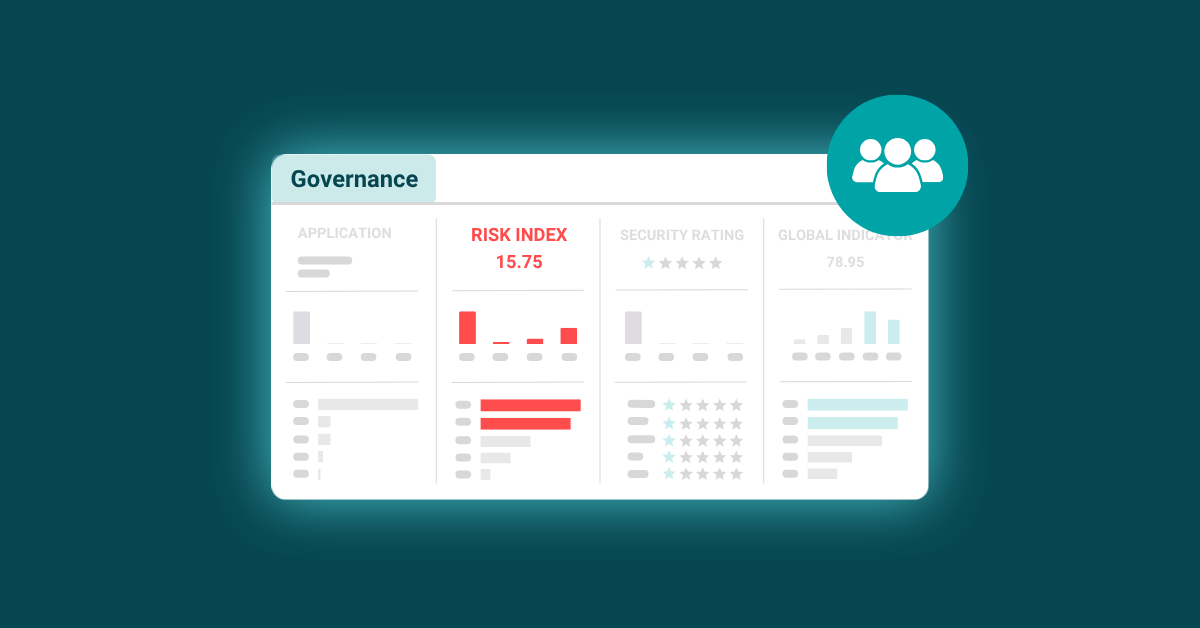
Kiuwan provides portfolio-wide visibility into security posture and technical debt, with support for C# alongside other languages and frameworks.
Static code analysis is most effective as part of a broader, layered approach to application security. Successful programs combine static analysis with dynamic testing and runtime validation, integrate security checks early in DevSecOps workflows, and continuously monitor risk and technical debt.
The result is a wealth of actionable insights that guide remediation and balance development speed against security and compliance requirements.
Ready to find security and maintainability issues earlier in your C# development workflow? Start your free trial of Kiuwan.
Static analysis identifies security vulnerabilities, code quality issues, standards violations, and dependency risks in C# source code, without executing the application.
Static analysis detects injection flaws, insecure configurations, hardcoded credentials, and other patterns aligned with OWASP Top 10 and CWE categories.
Traditional testing validates application behavior at runtime. Static analysis examines source code structure and patterns before execution.
Static analysis significantly reduces the risk of known vulnerability patterns reaching production. However, it cannot guarantee complete prevention. It is most effective as one layer in a broader security program.
Static tools apply generalized rules to code without runtime context, which means they sometimes flag patterns that are not actually exploitable in a given application. Tuning rule sets and reviewing findings in context helps manage this.
Static analysis scans can be automated to run on every build or pull request, providing consistent security checks.
No. It is a critical component, but it cannot detect runtime vulnerabilities or environment-specific weaknesses. It should be combined with dynamic testing and other security practices.
Use static analysis early in development to catch structural and security issues in code before execution. Use dynamic testing to validate behavior in running environments and surface issues that only emerge at runtime. Both are needed for comprehensive coverage.