Continuous Vulnerability Monitoring: How It Works
A developer adds a dependency mid-sprint to solve a routing problem. It works, the pull request merges, and the team moves on. Four days later, a CVE is disclosed against…

Every application you deploy is a potential entry point for attackers. Without systematic testing, vulnerabilities accumulate across your codebase, third-party components, and runtime environments. Application vulnerability testing identifies these security weaknesses before attackers exploit them. Modern development cycles push code continuously, which means security testing needs to keep pace with every commit, build, and deployment. For most teams, application vulnerability software is the practical way to scale this testing, automate detection, and keep remediation moving alongside development.
This post will define application vulnerability testing and look at its main benefits for strengthening your application security posture. We’ll look at the role that application security plays in your broader software development lifecycle (SDLC), and how it differs from other testing techniques. We’ll also survey the biggest challenges that companies face as they improve their application security testing pipeline, which best practices can solve them, and how an AppSec solution like Kiuwan can help.
Tool sprawl, rapid development environments, and increasingly sophisticated threat actors all cause applications’ attack surface to grow faster than ever, placing your organization at risk of a security incident. Application vulnerability testing is the process of identifying, analyzing, and prioritizing security weaknesses within applications before a threat actor can exploit them, minimizing your attack surface and fortifying your security posture.
While software security testing (SST) can cover a broader range of security issues across your environment, application vulnerability testing is more specific. It focuses on application code, third-party components, configurations, APIs, and runtime behavior.
Application vulnerability testing also differs from one-time audits because it is designed to be continuous and integrated into development workflows. This is especially critical as attack surfaces expand, release cycles accelerate, and compliance expectations tighten.
Application vulnerability testing works by evaluating proprietary and open-source code, checking for misconfigurations or errors, analyzing application performance at rest and during runtime, and ensuring that all assets in your codebase comply with the applicable regulations. Far from a discrete step in the testing lifecycle, it spans multiple phases in the SDLC (particularly during coding) at build time, before deployment, and in production.
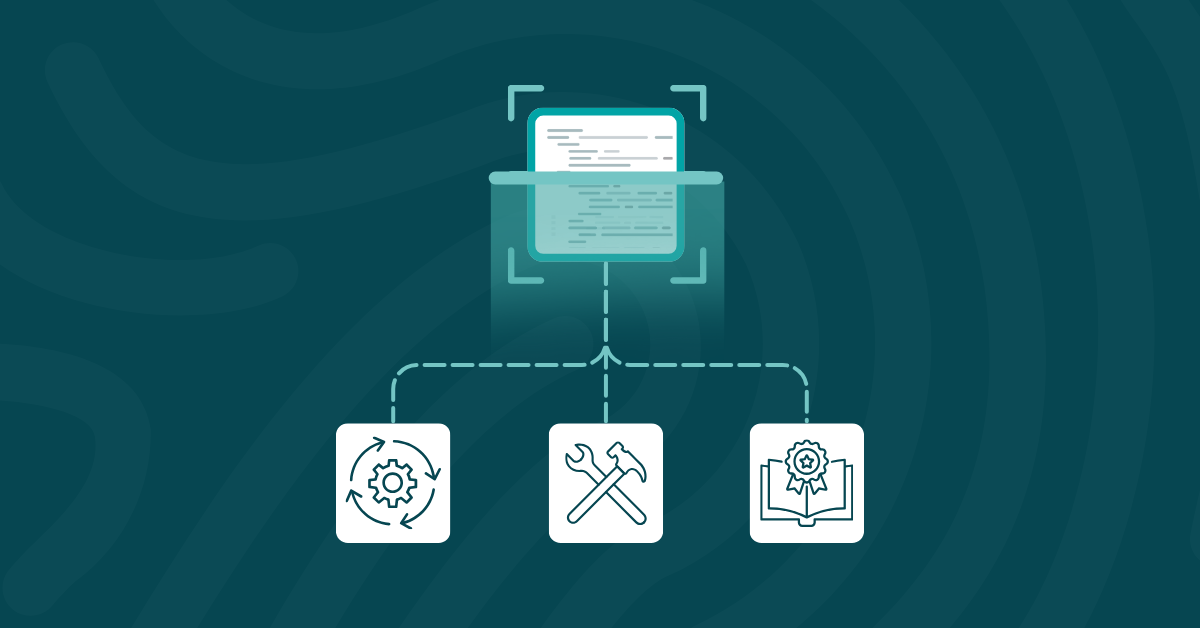
The exact steps may vary according to your environment, but a typical application vulnerability testing pipeline includes:
An effective program functions as a feedback loop within your CI/CD pipeline, not as a checkpoint. It should combine automated scanning with manual review, support shift-left DevSecOps practices, and integrate naturally into your existing workflows.
There’s no single solution that provides complete testing coverage for your applications. It takes a wide range of testing tools and methods to evaluate your application security, so implementing multiple solutions is often the best way to achieve comprehensive test coverage. Some of the leading application security technologies are:
By analyzing source code without executing the application, SAST helps catch issues like injection flaws, insecure references, and some hardcoded secrets early. It’s best used during coding and integration.
While SAST analyzes code before execution, DAST tests running applications by simulating attacks from the outside. It can identify runtime issues like authentication weaknesses, security misconfigurations, and input handling flaws. It’s best used in staging and production-like environments.
SCA scans third-party and open-source components for known vulnerabilities. It tracks dependencies and flags outdated or risky libraries, helping teams reduce the risks most commonly associated with open-source usage.
IAST combines static and dynamic approaches by analyzing application behavior during runtime, typically using instrumentation or an agent. It can provide added context about root causes and affected code lines to help teams remediate issues faster.
While these are the primary application vulnerability testing solutions, other technologies help fortify your security posture as well. Rapid Application Self-Protection (RASP) monitors an application’s behavior in real time, and shuts the application down to block threats if they’re detected. API security testing checks for vulnerabilities across API integrations, such as authentication, authorization, and data exposure flaws. Manual testing through ethical hacking is also useful for gaining deeper intelligence into your application’s performance, and for detecting vulnerabilities that automated tools could miss.
Application vulnerability testing not only enhances your security posture, it can also support more efficient development practices and helps your team write cleaner, more secure code. A few benefits that application vulnerability testing can bring to your development team include:
By streamlining your workflows, delivering clearer insights about your environment, and helping you maintain compliance, your development teams will be empowered to build better products and to release them faster. This drives innovation across the rest of your operations, giving you a competitive edge.
With the right tools in place, a robust application security testing environment should support broad coverage and help you identify and resolve your application’s vulnerabilities. The main vulnerabilities that application security tools can help uncover include:
Whether it’s poorly sanitized inputs or dependencies missing an update or patch, these vulnerabilities can slow down your operations, compromise user credentials, and put sensitive data at risk — and application security testing can stop them.
While application vulnerability testing can help you identify and remediate many of the primary vulnerabilities in your product, penetration testing lets you think like a hacker, so that you can stop them before they attack. Instead of adopting an “either/or” approach, the two should be used to complement one another to give you comprehensive test coverage. Some of the strengths of each method include:
Generally, vulnerability testing provides breadth and frequency to your application security processes, while penetration testing provides depth and context. Each method takes a different approach to resolving your application vulnerabilities, but both are essential for helping you maintain a strong security posture.
Tool sprawl and rapid development cycles make introducing any new tool into your environment a challenge, but implementing certain application security best practices can simplify the process. A few best practices to consider are:
Generally, vulnerability testing provides breadth and frequency, while penetration testing provides depth and context. Each method takes a different approach to improving application security, but both play an important role in maintaining a strong security posture.
Even with these best practices in place, certain vulnerability testing challenges may arise, so it’s important to know what steps you can take to address them. Here are some key testing hurdles to watch out for:
Many of these challenges can be reduced with the right application security solution and well-designed workflows. For example, Kiuwan can help teams consolidate SAST and SCA signals into a more centralized workflow, and it provides configuration options for policies, thresholds, and notifications so teams can reduce noise and focus on what matters most.
Kiuwan also integrates into common development environments and CI/CD workflows, which can lower friction for teams that are less experienced with security tooling.
Kiuwan provides capabilities that support application vulnerability testing across multiple methods, including SAST and SCA, alongside code quality and software governance.
Some of the features Kiuwan offers include:
Armed with these capabilities, teams can strengthen their application security posture, reduce risk earlier in the SDLC, and improve consistency across applications and teams.
Between fast development cycles and third-party components, it’s not a question of whether vulnerabilities will exist. It’s how quickly you can find and fix them, and whether you catch them before attackers do. Application vulnerability testing helps teams identify, analyze, and prioritize weaknesses across applications, and it works best when it’s continuous, integrated into delivery workflows, and actionable.
Kiuwan supports application vulnerability testing with SAST and SCA capabilities, plus code quality and governance options to help teams map findings to common standards and manage remediation across projects.
To see how Kiuwan can support your application vulnerability testing program, start a free 14-day Kiuwan trial today.