SAST and SCA in the Age of AI: Key Findings from the Sembi Software Quality Pulse Report
May 19th, 2026
Jeslyn Stiles
A sneak peek at key findings from Sembi’s first-ever industry-wide survey | Kiuwan
The code your SAST and SCA tools were tuned to analyze is changing fast. With more than half of all code now AI-generated or AI-assisted, application security teams are facing a fundamentally different risk surface—more volume, more variability, and new vulnerability patterns that traditional analysis wasn’t designed to catch. The Sembi Software Quality Pulse Report, drawn from nearly 4,000 practitioners, shows exactly how the industry is—and isn’t—keeping up.
TL;DR
Adoption of security testing is real, but fragmentation is limiting its effectiveness. AI-generated code is introducing new vulnerability patterns that SAST and SCA tools need to evolve to detect, and a false-positive rate approaching 50% is eroding the trust teams need to act on findings quickly. The organizations closing the gap are those treating security analysis as a continuous, integrated discipline, not a point-in-time check.
Security Testing Is Widespread, But Fragmented
The adoption of application security testing is real. SAST leads the pack among the most commonly used security testing methods, alongside API security testing and penetration testing. But the bigger story is the fragmentation beneath that adoption. No single security method dominates. Each approach is used by only a fraction of teams, and those tools rarely communicate with one another. Developers are left manually coordinating multiple testing methods—creating gaps, duplicated effort, and inconsistent enforcement.
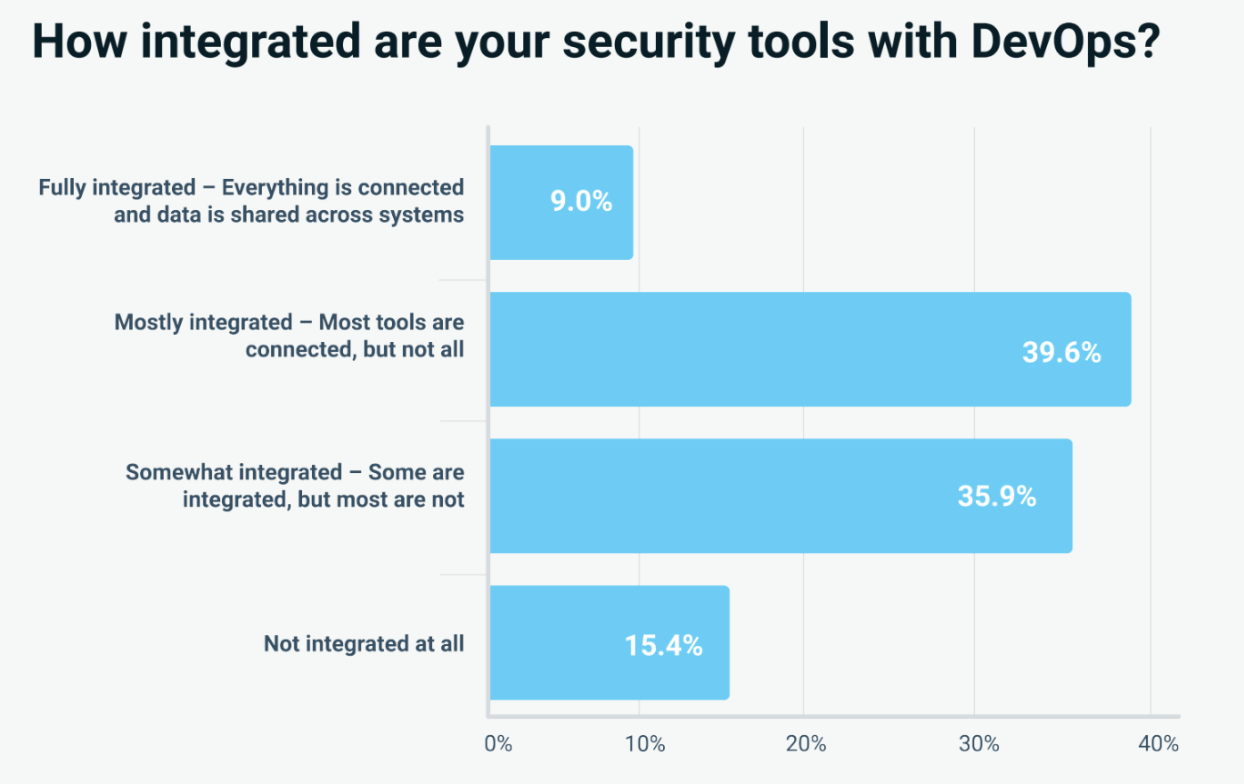
Only 9% of security teams report fully integrated security toolchains
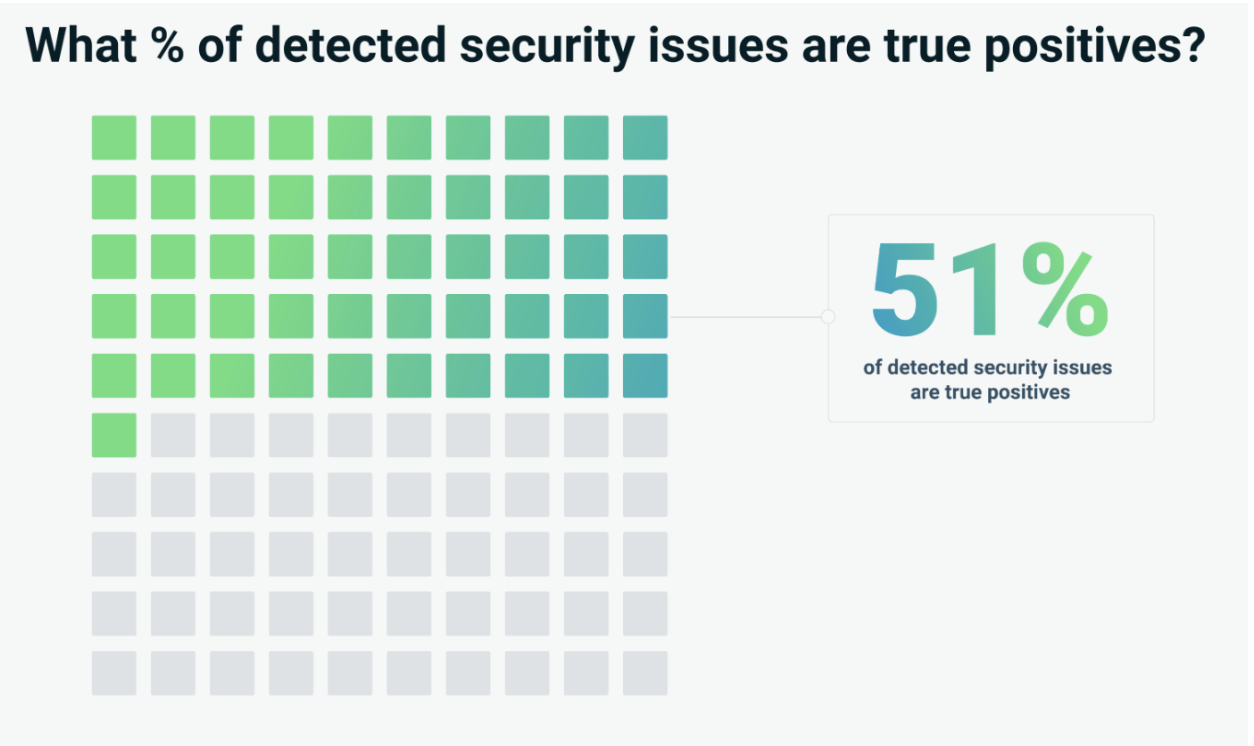
Only 51% of detected security issues are true positives—meaning nearly half of the results are noise
Threat modeling, the most proactive security practice, ranks near the bottom in adoption
The picture becomes clear: most organizations have some security testing in place, but lack a unified security strategy. The result is coverage that’s real but incomplete, and a growing blind spot as systems grow more complex.
AI-Generated Code Is Creating New SAST and SCA Challenges
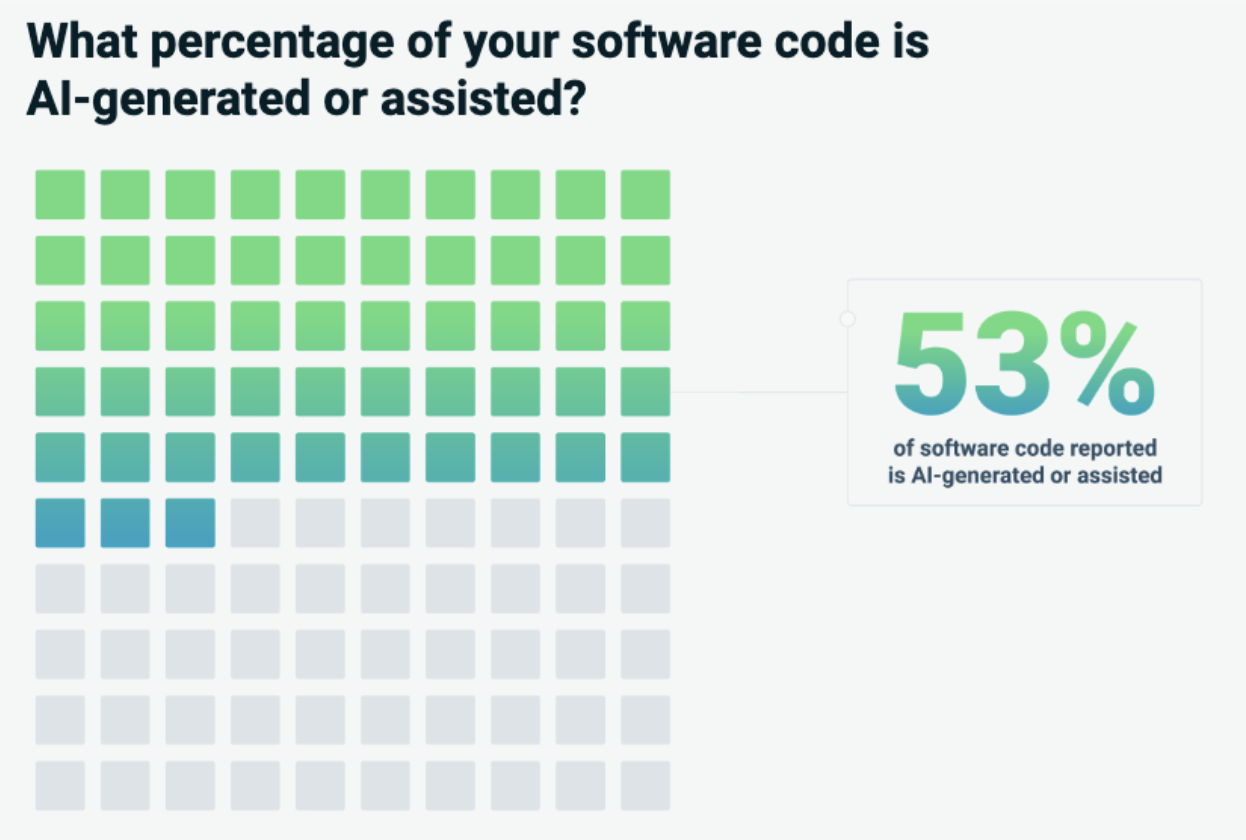
The most consequential finding for application security teams in 2026: respondents report that an average of 53% of their code is now AI-generated or AI-assisted. This changes the nature of what SAST and SCA tools need to analyze, and how.
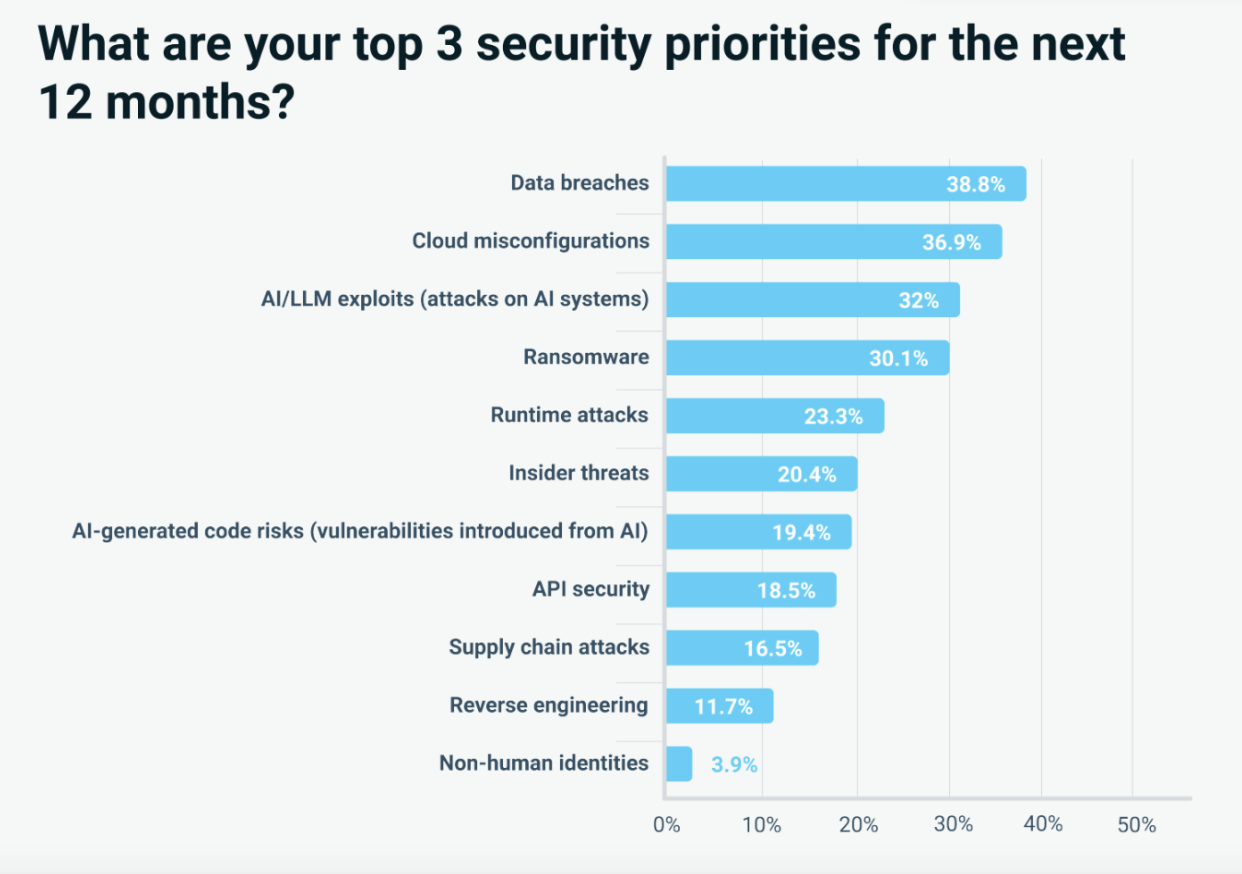
AI/LLM threats rank among the top three security priorities for the year ahead
12.9% of security professionals report that AI code is generating new, unfamiliar security concerns
Traditional validation methods aren’t always equipped to catch AI-introduced vulnerability patterns
AI-generated code can introduce insecure coding patterns, unfamiliar dependencies, and new open-source components that SCA tools need to track and evaluate. The volume of code is up, the unpredictability of what that code contains is up, and security analysis tools that can scale to AI-assisted development pipelines are no longer optional—they’re essential.
The False Positive Problem Is Eroding Trust
Another finding worth sitting with is that only 51% of detected security issues are true positives, meaning nearly half of what security tools are flagging is noise. That erosion of signal quality has real consequences: security teams are spending time chasing false alerts instead of remediating actual vulnerabilities, and confidence in tooling is declining.
For SAST and SCA tools, accuracy matters as much as coverage. High false positive rates don’t just waste time; they cause teams to deprioritize alerts, increasing the likelihood that real vulnerabilities get dismissed along with the false ones.
Data Breaches and Cloud Misconfigurations Top Priority Lists
When security professionals ranked their top concerns for 2026, data breaches (38.8%), cloud misconfigurations (36.9%), and AI/LLM-specific threats (32%) led the list. These aren’t abstract risks—they’re the specific vulnerabilities that SAST and SCA tools are positioned to identify and remediate before they become incidents.
The organizations best positioned to address these priorities are those that have moved security analysis earlier into the SDLC, integrated their toolchains with CI/CD pipelines, and reduced manual overhead through intelligent automation.
Want the full picture?
The Sembi Software Quality Pulse Report covers the full state of application security—from SAST and SCA adoption trends to AI’s impact on the threat landscape, staffing challenges, and the convergence of QA and security. Download it for the complete data.
What does the 2026 Software Quality Pulse Report reveal about SAST and SCA adoption?
SAST is one of the most widely used security testing methods, but adoption is fragmented across the industry. No single approach dominates, tools rarely communicate with each other, and only 9% of security teams report fully integrated toolchains. The result is security coverage that exists on paper but leaves real gaps in practice.
How is AI-generated code changing the demands on SAST and SCA tools?
With 53% of respondents’ code now AI-generated or AI-assisted, SAST and SCA tools are being asked to analyze a fundamentally different kind of codebase—one with higher volume, unfamiliar dependency patterns, and new vulnerability types. 12.9% of security professionals already report that AI code is introducing concerns that their current tools weren’t designed to catch. Scalability and AI-awareness are now table stakes for security analysis tooling.
Why are false positive rates such a significant issue for security teams?
The report found that only 51% of detected security issues are true positives, meaning nearly half of what tools flag is noise. High false positive rates don’t just waste time; they train teams to deprioritize alerts, which increases the risk that real vulnerabilities get ignored alongside the false ones. For SAST and SCA specifically, signal accuracy is as important as detection coverage.
How does security testing connect to the broader QA and security convergence trend?
The report found that 68% of professionals see strong value in aligning QA and security, and SAST and SCA sit at the center of that convergence. When security analysis is integrated into CI/CD pipelines and results are visible to both development and QA teams, organizations can make more informed release decisions and reduce the time from vulnerability discovery to remediation.
What should DevSecOps and AppSec teams prioritize based on the 2026 findings?
The data points to three priorities: reducing false positive rates to rebuild trust in tooling, integrating SAST and SCA findings into CI/CD pipelines for continuous feedback, and evolving analysis capabilities to handle AI-generated code. Teams that treat application security testing as a continuous, integrated discipline—rather than a point-in-time scan—are better positioned to address the top threats of 2026.
Get Your FREE Demo of Kiuwan Application Security Today!
Identify and remediate vulnerabilities with fast and efficient scanning and reporting. We are compliant with all security standards and offer tailored packages to mitigate your cyber risk within the SDLC.
Every October, the Cybersecurity and Infrastructure Security Agency (CISA) leads Cybersecurity Awareness Month, an annual effort to strengthen cybersecurity and protect the systems we rely on. This year’s theme, “Securing…
Development teams often have coding standards, review requirements, and security tools, but those controls can vary significantly across applications and teams. A code governance framework connects them by defining which…
Understanding and tracking security data breaches Security data breaches are one of the biggest challenges organizations face today. Every year, companies deal with data leaks, ransomware attacks, or unauthorized access…