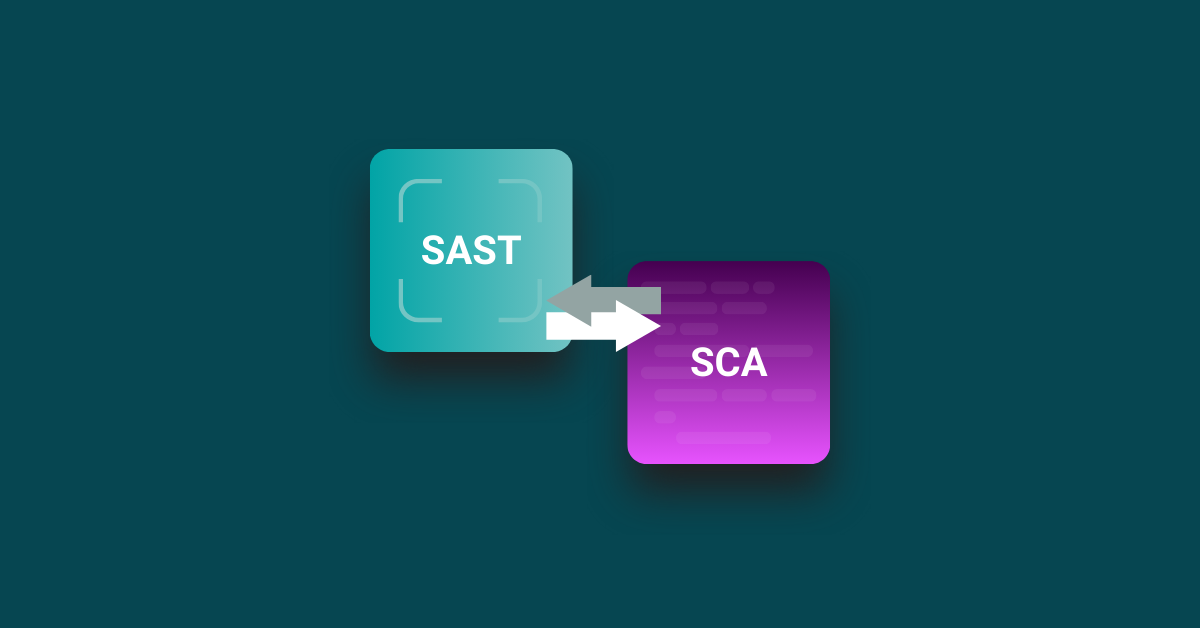
SAST vs. SCA: Understanding the Key Differences in Code Security Testing
February 17th, 2026
Ben Nettleton
Modern application security depends on understanding what’s in your code, both the source code you write and the third-party components you rely on. As software development accelerates and organizations adopt DevSecOps practices, teams face rising pressure to detect security vulnerabilities earlier in the software development lifecycle and strengthen their overall supply chain security posture.
Most applications today depend heavily on open-source libraries while also maintaining large volumes of proprietary code. This creates two distinct but equally important categories of security risks: issues introduced by your own secure coding practices and those introduced by external dependencies. That’s why static application security testing (SAST) and software composition analysis (SCA) have become foundational to modern vulnerability management.
This guide compares SAST vs. SCA, explains how each works, and shows why using both is essential for improving application security across your entire software supply chain.
What is SCA?
What does SCA testing do?
The overwhelming majority of applications (upwards of 97%) use at least one open-source component. While open-source software enables faster development, it also introduces third-party component risks that may be difficult to track manually—especially if your team is not continuously monitoring libraries for new vulnerabilities or patches.
Software composition analysis (SCA) helps teams identify and manage vulnerabilities in open-source components as part of a secure SDLC. At a glance, Kiuwan’s SCA capabilities allow development and security teams to:
Scan for vulnerabilities on a rolling basis
Integrate easily with tools like Jenkins plugins, IBM Bluemix DevOps Services, and other CI/CD systems
Track open-source libraries across 30+ programming languages
Identify and update patches for vulnerable open-source code
Identify dependencies and transitive dependencies in your application
When to use SCA security testing
Because nearly every application depends on open-source libraries, SCA is always necessary, especially before initial deployment. Teams can run SCA during development, during build processes, and after release as part of continuous monitoring to strengthen overall software supply chain security.
What is SAST?
What does static application security testing do?
SAST analyzes your first-party source code for potential security vulnerabilities without executing the application. It is typically used alongside SCA and before dynamic testing (DAST) to identify insecure coding patterns early.
SAST tools evaluate your source code based on predefined rules to flag issues such as SQL injection, insecure input validation, authorization flaws, and other weaknesses that could introduce exploitable security risks.
Unlike other forms of code analysis, SAST can run at any phase of development, even before the application is functional. Because these tools pinpoint the exact file and line number where issues occur, developers can remediate vulnerabilities quickly and maintain stronger secure coding practices throughout the development lifecycle.
When to conduct a SAST test
Your software testing team can use SAST tools at any point during development. Thanks to its static approach to detecting security vulnerabilities, it can find potential security risks in individual lines of code—meaning your team can use SAST tools at any time before deployment.
With scanning tools like Kiuwan’s SAST capabilities, developers and testers can run tests from the earliest stages of production and throughout the development process, including during QA and final checks.
The key difference between SAST and SCA
While both improve application security, each targets a different part of the codebase:
Logic flaws, insecure patterns, and injection vulnerabilities
Outdated libraries, license risks, known CVEs
When used
Throughout the SDLC, even early development
Pre-deployment + continuous monitoring
How issues are fixed
Rewrite or refactor insecure code
Patch, upgrade, or replace components
Execution needed?
No (static)
No (metadata and component analysis)
How SAST and SCA work together in DevSecOps
While SAST and SCA address different areas of risk, they are most effective when combined in a modern DevSecOps pipeline. Together, they provide full visibility into both code quality and the integrity of your software supply chain.
When used in CI/CD:
SCA prevents vulnerable third-party libraries from entering the codebase
Both feed into unified vulnerability management workflows
Teams reduce remediation time by catching issues earlier
Security becomes embedded directly into the development process
Using both ensures that development teams ship secure code while protecting the organization from dependency-based attacks, which remain one of the fastest-growing categories of application security breaches.
How SAST and SCA support compliance and industry standards
Organizations increasingly adopt SAST and SCA to support compliance frameworks and internal governance requirements. These tools help teams align with:
OWASP Top 10 (injection flaws, insecure components, etc.)
GDPR and SOC 2 expectations around secure software development
Internal secure coding standards
SAST ensures teams maintain consistent secure coding practices, while SCA demonstrates due diligence in managing vulnerabilities in third-party components—a growing requirement in many compliance audits.
Keep every part of your code secure with Kiuwan
Are you looking for ways to keep your first-party and open-source code secure for your clients and users? Kiuwan may have the tools you need. Request a free trial and see how you can strengthen your application security across every part of your codebase.
FAQ
What is the main difference between SAST and SCA in application security testing?
The main difference lies in the type of code each analyzes. SAST scans proprietary or first-party source code to detect logic flaws and insecure coding practices before the application runs. SCA examines open-source components and third-party libraries to identify known vulnerabilities and outdated dependencies.
Can SAST and SCA tools be used together in the same DevSecOps pipeline?
Yes. Many teams integrate both SAST and SCA in their continuous integration and delivery workflows. Running SAST early in development helps prevent new vulnerabilities, while SCA continuously monitors open-source components for security issues as the software evolves.
When should developers run SAST and SCA scans during the software development lifecycle?
SAST should be used from the earliest stages of coding through QA and pre-deployment testing. SCA scans should run throughout the lifecycle, including after release, to catch new vulnerabilities in open-source libraries or dependencies.
How do SAST and SCA help organizations meet compliance and data protection standards?
Both approaches support security frameworks such as OWASP, ISO 27001, and SOC 2. SAST validates secure coding practices, while SCA ensures that open-source components comply with vulnerability management requirements, helping maintain audit-ready documentation.
What features should teams look for when choosing between different SAST and SCA solutions?
Look for tools that integrate with existing CI/CD platforms, provide detailed remediation guidance, minimize false positives, and offer continuous vulnerability monitoring. Unified solutions like Kiuwan can simplify management by combining both types of testing in a single interface.
Get Your FREE Demo of Kiuwan Application Security Today!
Identify and remediate vulnerabilities with fast and efficient scanning and reporting. We are compliant with all security standards and offer tailored packages to mitigate your cyber risk within the SDLC.
AI-assisted development has changed how quickly teams can produce code, but it has not changed the security standards that code needs to meet. According to the Sembi Software Quality Pulse…
Most Java teams shopping for a code quality tool already have one. They’re replacing it because the false positives drowned the signal, the security overlap turned out to be less…
AI now plays a role in more than half of the code produced within the organizations surveyed. According to the Sembi Software Quality Pulse Report, respondents estimate that, on average,…