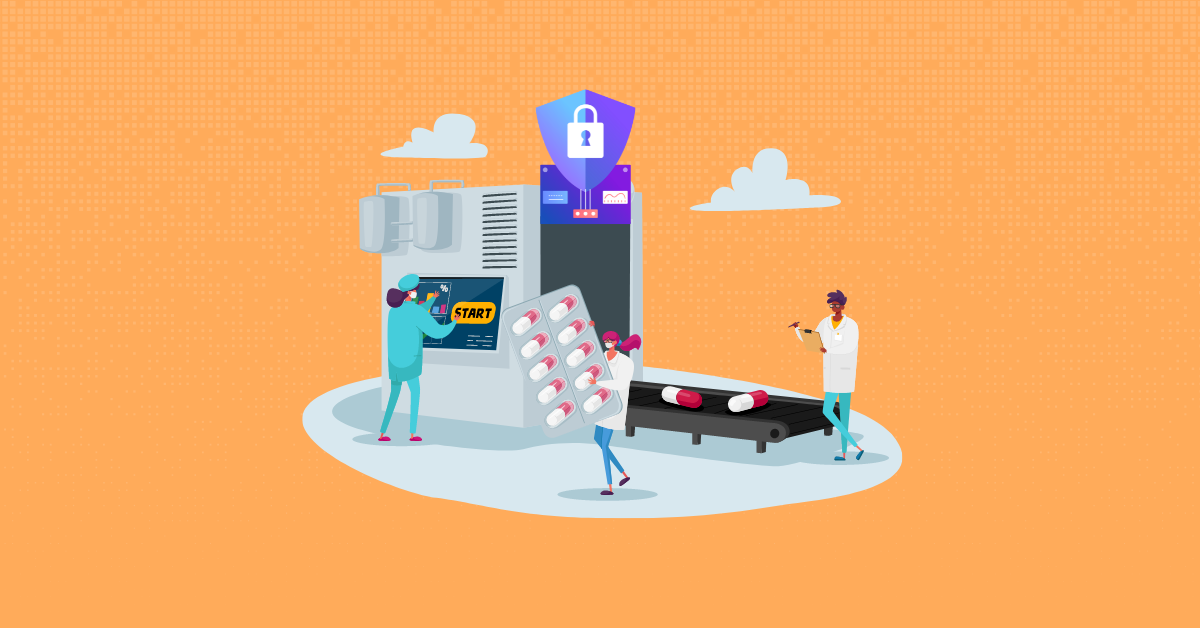
Pharmaceutical companies face an increased risk of data breaches due to insufficient application security.
Recent research has found that the pharmaceutical industry is among the top three industries for data breaches, with the average breach cost topping $10 million. This is a huge concern for organizations that handle sensitive patient information and confidential records.
But how can pharmaceutical companies ensure that their applications and networks are secure? The answer lies in investing in a robust application security solution.
Application security is an integral part of any organization’s overall security strategy. It helps to protect against malicious attacks and acts as a barrier between the internal environment and external threats. In addition, a robust application security solution can help to identify, detect, and prevent security vulnerabilities within applications.
Why Pharmaceutical Companies Are at Risk
Pharmaceutical companies are particularly vulnerable to cyberattacks because of the sensitive data they store. They handle vast amounts of patient information, medical records, and confidential documents, making them an attractive target for hackers.
Pharmaceutical companies face a variety of security flaws that can expose them to data breaches. A major issue is the lack of investment in secure application development. As pharmaceutical organizations try to get products to market faster, they often sacrifice security and fail to develop secure applications.
Additionally, many of these applications are built on outdated technologies or lack proper authentication and authorization, allowing hackers to gain access to sensitive data. Other vulnerabilities can result from using third-party applications or services without adequate security measures to protect against data breaches.
Big Pharma Cyber Attacks Are on the Rise
According to a report by Critical Insight, healthcare data breaches are on the rise. In 2021, 45 million people’s records were exposed due to healthcare data breaches — significantly more than in 2020.
In December 2020, the European Medicines Agency (EMA) reported a breach of its confidential data related to the Pfizer/BioNTech vaccine. Similarly, North Korean hackers targeted AstraZeneca by launching a spear-phishing campaign to gain access to employee computers. North Korean hacking groups later targeted Johnson & Johnson and Novavax to steal intellectual property and confidential data related to their vaccine trials.
These high-profile incidents are part of an emerging trend of cybercrime targeting the pharmaceutical industry. Hackers are increasingly targeting medical records, research and development information, and other sensitive data from these organizations. Even with billions of dollars spent on cybersecurity each year, it is clear that pharmaceutical companies are still vulnerable to attack.
What Can Pharmaceutical Companies Do?
Pharmaceutical companies must invest in the right technology and resources to protect their applications from malicious actors. Remediation steps can prevent data breaches and keep applications secure.
Some best practices for pharmaceutical companies to follow include:
1. Invest in Application Security
Pharmaceutical companies must invest in application security solutions such as static and dynamic analysis tools to protect their data from malicious actors. An effective software security solution should support multiple languages and platforms, enabling organizations to keep pace with evolving technology trends.
Static analysis examines application source code to identify potential vulnerabilities before attackers can exploit them. It is generally considered a more efficient method than traditional penetration testing. Dynamic analysis takes a more active approach, looking at how an application behaves when executed in the real world. This helps to detect any abnormalities or behavior that could indicate malicious or suspicious activity on the network.
2. Adopt Secure Development Practices
Pharmaceutical companies must adopt secure development practices to protect their networks from malicious actors. These practices include code reviews, training developers on safe coding principles, and developing an effective patch management system.
Code reviews are one of the most critical steps in the software development process. Organizations can significantly reduce the risk of a cyberattack or data breach by having a team of experienced programmers review code line by line for flaws and security vulnerabilities. Additionally, they can ensure data is never exposed to malicious actors or outside entities.
Ideally, all developers should receive training on secure coding principles and best practices before deploying code into production environments. This training should include input validation and output encoding methods to help prevent attackers from injecting malicious code into applications and manipulating datasets.
3. Provide Effective Patch Management and Incident Response
An effective patch management system is essential for any organization that stores and handles sensitive data. Pharmaceutical companies, in particular, must ensure their systems are fully patched and up to date with the latest security protocols to protect against potential cyber threats.
The key to successful patch management is implementing a process that quickly and accurately addresses new updates. This means efficiently monitoring changes, identifying security vulnerabilities or exploits, testing patches before deploying them across systems, and rolling back failed updates as needed. It also involves keeping track of all impacted systems, including any third-party applications companies may use with their network infrastructure.
Furthermore, organizations should create a comprehensive incident response plan (IRP) outlining how employees respond to detected threats or vulnerabilities. This includes conducting a risk assessment, identifying the root cause, and providing guidance on the steps needed to remediate the issues to prevent similar incidents from recurring.
Protect Your Data With Kiuwan
As cybercrime and data breaches continue to increase, pharmaceutical companies must invest in effective application security solutions and secure development practices. Malicious actors constantly adapt their tactics and use new techniques to target vulnerable networks. Hence, organizations must stay ahead of these threats by deploying reliable solutions to detect illicit activity before it can cause significant damage.
Kiuwan is an end-to-end application security platform that helps pharmaceutical companies identify, analyze, and mitigate the risks posed by code vulnerabilities. It provides a comprehensive set of security tools for organizations to monitor their applications, detect threats or weaknesses, and develop solutions to address them quickly.
With software composition analysis (SCA) and static application security testing (SAST), Kiuwan can identify any security flaws, misconfigurations, or vulnerabilities in an application’s code. It then provides detailed reports and insights into the issues, so organizations can prioritize their fixes by severity and risk.