Data Privacy Week aims to educate people on how to manage their personal data. But this week isn’t just for individuals; it is a shared reminder for every industry and business that collects, stores, or uses personal information.
The observance builds on Data Privacy Day, which began as Europe’s Data Protection Day in 2007 and was later recognized in the United States on January 28th as National Data Privacy Day. It is supported by organizations like the National Cybersecurity Alliance (NCSA) and the U.S. Federal Privacy Council; along with governments and companies focused on the secure and ethical use of data. Data Privacy Week is observed globally during the last week of January.
This year, Data Privacy Week will take place from January 26 to January 30th. Each year includes a theme to reinforce the message, and this year’s focus is taking control of online data.
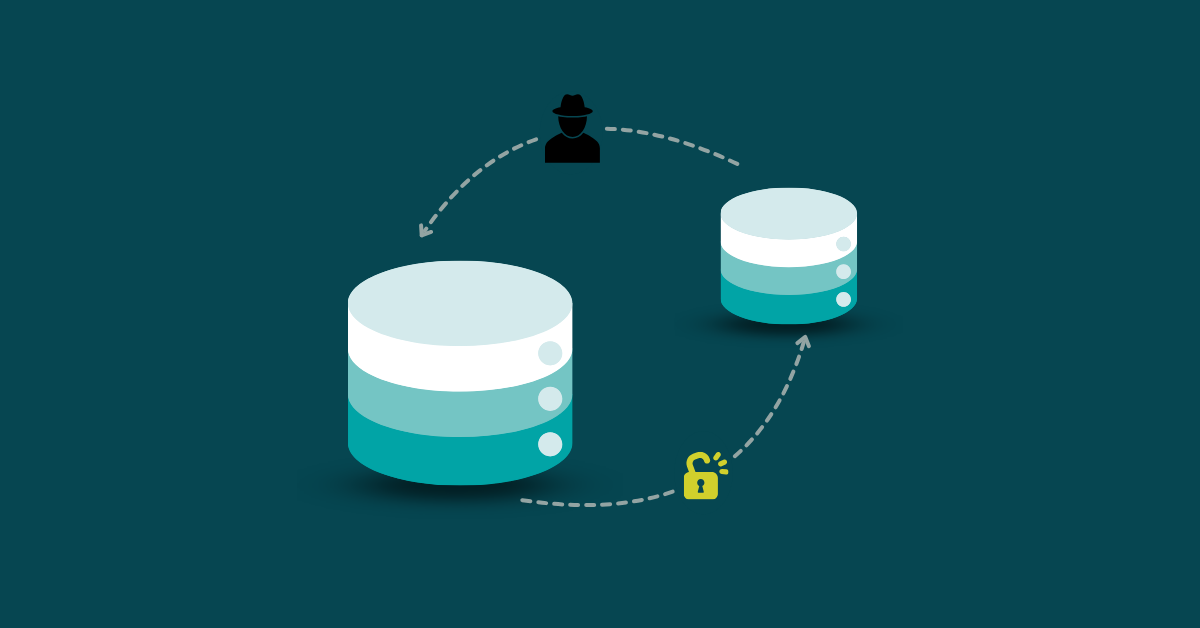
While we cannot control how every piece of data is collected about us, there are measures you can take to help manage this. The campaign goes beyond personal data: it also raises awareness that bad actors can infiltrate any data online, and any business or organization could potentially become the next data breach headline.
Why privacy must be a professional priority
The amount of data that is collected about people is staggering and can be stored indefinitely, either with or without your knowledge. Data breaches are not uncommon, but each year they become more complex. And with a plethora of data available, it is easy for a bad actor to connect the dots between your personal and professional profiles.
Our professional data is tightly connected to our companies, and one small mistake, like opening a link or approving a fraudulent MFA request, could lead to an expensive and harmful data breach. Now that the consequences of these types of cyberattacks are becoming more apparent, companies are also riding this wave by adding security measures within their policies and procedures. And rightfully so.
Just last year, a threat actor group called ShinyHunters was heavily targeting CRM systems like Salesforce in order to gain business information and PII through social engineering. The breach not only exposed customer and purchasing information, it also exposed loyalty program details affecting Salesforce customers like Google, Qantas, LVMH, and more.
But that’s just one example: late last year, a Japanese Beer company, Asahi, fell victim to a massive breach, this time jeopardizing employees’ information. The Qilin ransomware group was the mastermind behind the malicious attack, exposing 1.9 million individuals. Customers, employees, retirees, and family members’ data were compromised. Data breaches like this illustrate a broader reality of how your personal and professional data are intertwined.
Knowing is half the battle, but also being cognizant about securing your professional data is equally crucial, as this directly impacts both you and the company. And with the assistance of AI, this allows all types of hackers to easily exfiltrate data. Let’s take a look at the different methods they might use to gain access.
Entry points that bad actors use to access your professional data
Being able to spot malicious activity is precisely what companies are trying to educate their employees about. Even the tiniest mistake or lax behavior is a bad actor’s dream target, and it’s getting easier as technology advances. Here are some common ways hackers can exfiltrate your professional data.
Social engineering
Social engineering is one of the easiest ways to prey on employees. Hackers can retrieve confidential data or install malware by impersonating a trustworthy entity and presenting a highly plausible scenario to trick a colleague. They will exploit email, SMS or social media to execute this tactic with ease, as every employee relies on these communication channels for work.
These manipulation tactics are designed to exploit human error rather than software vulnerabilities, and according to the IBM Cost of Data Breach Report 2025, human error jumped up from 22% to 26% as a cause of data breaches.
Weak or stolen credentials
The amount of online activity has tripled since the dawn of dial-up. Every platform, app, or digital space requires a password in order to gain access. Today, the average person manages approximately 100–255 unique accounts, including both personal and professional.
Yes, this number is daunting. It’s no surprise that people tend to use weaker credentials across numerous accounts to make entry fast and easy, but this is exactly the problem. Hackers are able to penetrate through brute force, password spraying, or credential stuffing, which uses already leaked data from one breach to infiltrate another. The weaker your credentials are, the more likely they’ve already been exploited from another breach and used again, like “cyber recycling.”
Cloud misconfigurations
Improperly secured cloud storage is another gateway for bad actors. And in a world where cloud environments are being utilized heavily, it is a prime target for large-scale breaches. By exploiting human error and default settings, a hacker can target public-facing cloud storage environments like AWS S3, which house sensitive files, intellectual property, and PII.
These cloud servers are used in everyday work life to hold, store, organize, and retrieve company data. And if these servers are left without strong authentication, hackers can bypass MFA, use insecure APIs, or utilize shadow assets, which are old test environments or abandoned servers lacking security that can cause catastrophic damage.
Insider threats
It’s easy to keep your eyes peeled for external threats, but internal ones can be more dangerous. Lax security protocols or employee mishandling are another cause for data breaches. Whether malicious or negligent, an unauthorized or accidental access can fast-track a bad actor straight to your private data.
Malicious insiders are agitated current or former employees whose credentials haven’t been fully retired and are collaborating with external agents seeking revenge. Meanwhile, negligent insiders are quite the opposite: they lack an ulterior motive but are careless with their actions, falling victim to phishing attacks. Both can compromise your professional data and cost companies an average of 4.9 million USD in the process.
AI-enhanced phishing
While society increasingly relies on AI for daily tasks, hackers do too. Phishing has evolved from ordinary generic spam to highly sophisticated attacks: hackers can leverage AI to tailor prompts within seconds and execute automated, hyper-personalized spear-phishing attacks that cut time in half. But it doesn’t stop there.
Deepfakes, whether audio or visual, fall under this category and have a 47% success rate. These types of attacks can impersonate a CEO’s voice or fake a virtual conference call to trick employees into transferring sensitive files or information.
Best practices to safeguard professional data
Data protection is not only for personal use, but it’s also crucial at work. There are multiple entry points that malicious actors can take, but there are effective ways you can implement to prevent this from happening.
Make informed decisions
Treat your professional data like it’s your own personal privacy. Think before sharing any professional data to access a new app for work, or using your company email to download a PDF. An innocent download can be intercepted in a data breach. Paid sites, APIs, and apps all consistently exchange your data. It’s easy to give away professional data because we tend to think it doesn’t directly affect us, but it does. If your professional data is exposed, so is your company’s data.
Strong access controls
Get into the habit of using stronger and more complex passwords. Generating new passwords for a new app or new platform can take some time. Since there are browser-based password generators, some of which are integrated directly into your browser, every time you create a new account this step can make this process easier. Also, enabling multi-factor authentication (MFA) on all your professional accounts adds that extra layer of security that helps safeguard you and your company.
Implement digital security
No matter what professional industry you are in, it’s critical to use digital security when sending sensitive information. Encrypt sensitive data both server-side and in transit. You never know when a data breach is likely to happen and could very well intercept a day-to-day data transfer.
Make sure to keep company software, operating systems, and applications updated to bridge security gaps. Just as a company evolves, so do your procedures: Regularly delete unnecessary work data, files, or apps that are no longer used. For example, if your company switches from Slack to Teams, be sure to delete the Slack app from your devices to prevent further exposure.
Training and awareness
Knowledge is power. Training employees, remote workers, and third-party agencies on how to spot malicious behavior is a collective step toward being secure. All it takes is one small incident to cause a catastrophic data breach. But if your team is educated, this strengthens the entire company’s security posture.
Bottom line
With cyber threats becoming more sophisticated by the year, data privacy—whether personal or professional—will always be a growing concern. While Data Privacy Week sheds light on the topic, taking preventive measures to protect your professional data is something that should be a regular routine. But security shouldn’t stop there: Applications are a common entry point for bad actors. Kiuwan’s end-to-end application security platform can help development teams proactively scan for vulnerabilities and reduce threats from third-party components.
Security is vital; don’t wait until it’s too late. Request a free trial today and discover how Kiuwan identifies and remediates vulnerabilities through efficient scanning and reporting.